


Where Is Saint Jerome?
Fr. Scott Haynes

The Mysterious Journey of His Mortal Remains
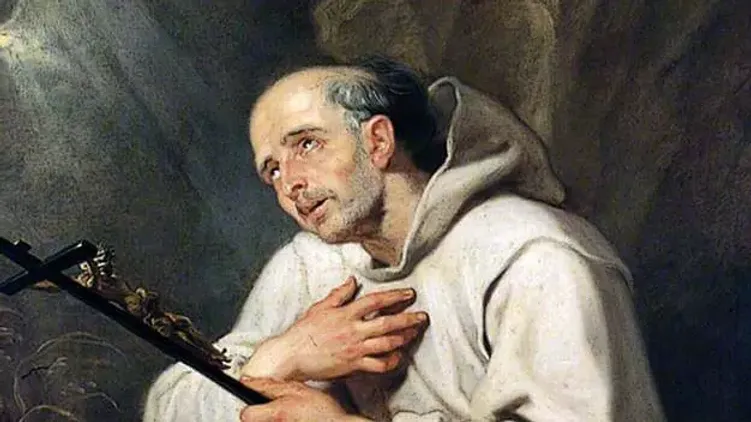
Every September 30, the Church honors Saint Jerome, priest, monk, biblical scholar, and Doctor of the Church. Few saints have influenced Western Christianity so profoundly. Jerome devoted decades to the study of Sacred Scripture and produced the great Latin translation and revision of the Bible that became known as the Vulgate. Yet the story of Jerome did not end with his death. The whereabouts of his mortal remains have a fascinating and somewhat mysterious history stretching from Bethlehem to Rome, and eventually to a secret hiding place within one of Christianity's greatest basilicas.
Jerome in Bethlehem
Jerome was born around A.D. 347 at Stridon, somewhere along the borderlands of ancient Dalmatia and Pannonia. After studying in Rome, traveling extensively, embracing the ascetical life, and being ordained a priest, he eventually settled in Bethlehem around 386.
There he found the place where he would spend the final decades of his life.
Jerome established himself close to the Grotto of the Nativity, the place traditionally identified as the birthplace of Christ. He lived an austere life of prayer, scholarship, correspondence, and biblical study. With the assistance of Saint Paula and her daughter Saint Eustochium, religious communities were established near the holy grotto.
For Jerome, living in Bethlehem was not merely convenient. The landscape itself became part of his study of Scripture. He could learn Hebrew from Jewish teachers, examine biblical geography, consult manuscripts, and study the language and customs of the land in which so many events of salvation history had occurred.
The caves beneath the present Basilica of the Nativity still preserve his memory. The Franciscan Custody of the Holy Land records that Jerome prayed and meditated in the caves near the Holy Grotto. The complex contains the traditional tombs associated with Jerome, Paula, and Eustochium, together with numerous other ancient burials.¹
Jerome died in Bethlehem around the year 420 and was buried there.
But he would not remain there forever.
From Bethlehem to Rome
Many centuries after Jerome's death, his remains were transferred from the Holy Land to Rome.
The official historical museum of the Papal Basilica of Santa Maria Maggiore states that Jerome's remains were translated from Bethlehem to the basilica around 1285.²
The destination was extraordinarily appropriate.
Santa Maria Maggiore possessed a profound connection with Bethlehem. The basilica had long been associated with the Nativity and was known as Sancta Maria ad Praesepe, Saint Mary at the Crib. It preserves the famous relics traditionally identified with the wood of the Holy Crib. Because of this connection with the birthplace of Christ, Santa Maria Maggiore became known as the "Bethlehem of the West."³
Thus Jerome, who had chosen to live and die beside Christ's birthplace, was brought from Bethlehem in the Holy Land to the symbolic Bethlehem of Rome.
His relics became objects of considerable devotion.
During the fifteenth century, Cardinal Guillaume d'Estouteville commissioned the Florentine sculptor Mino da Fiesole to create an elaborate shrine or "Ark of Saint Jerome" at Santa Maria Maggiore.
Constructed between 1461 and 1464, it was decorated with sculpted scenes from Jerome's life, including his penance in the desert, his studies, and the famous legend of Jerome and the lion.⁴
For generations, pilgrims coming to Santa Maria Maggiore could therefore venerate the great biblical scholar in a magnificent shrine.
Then something happened.
The Disappearance of Saint Jerome
In 1585, the energetic Pope Sixtus V ascended the papal throne. He undertook enormous architectural projects throughout Rome, transforming churches, streets, monuments, and pilgrimage routes.
Santa Maria Maggiore was among the churches dramatically affected by his plans.
Sixtus ordered the construction of the magnificent chapel now known as the Sistine Chapel of Santa Maria Maggiore, not to be confused with the more famous Sistine Chapel in the Vatican. The project required substantial alterations to the existing arrangement of the basilica.
Jerome's shrine stood in the way.
In 1586, the Ark of Saint Jerome was dismantled to make room for the new funerary chapel of Sixtus V. Italy's Ministry of Culture confirms both the dismantling of the shrine and the reason for it.⁵
At this point the history becomes considerably more mysterious.
An account preserved in the great collection of saints' lives and historical materials known as the Acta Sanctorum records a tradition that Jerome's body had remained near the Chapel of the Holy Crib until the pontificate of Sixtus V.
Then, according to the account, the body was secretly removed and hidden.
Even more intriguing is the reason given for doing so. The remains were supposedly concealed so that Sixtus V could not transfer them somewhere else. The hiding was apparently so successful that later attempts to locate Jerome's body proved unsuccessful.⁶
There is no evidence that this concealment occurred because Rome was under invasion or because soldiers were threatening to desecrate the relics. The episode instead appears to have been connected with the great reconstruction of Santa Maria Maggiore and concern that Jerome's remains might be permanently removed from their traditional home.
Whoever concealed the relics apparently intended to protect them.
But there was an unforeseen consequence.
The precise location of the hiding place was forgotten.
The man who had spent his life uncovering the meaning of ancient texts had himself become hidden beneath the stones of an ancient church.
Were Jerome's Bones Found Again?
The story does not quite end there.
Relics were subsequently discovered beneath the principal altar of Santa Maria Maggiore, raising an obvious question: could these have been the remains that had been secretly concealed?
The Acta Sanctorum examined precisely this question and regarded the identification as very probable.⁷
Nevertheless, the episode leaves an element of historical uncertainty. We cannot reconstruct every movement of the bones with the precision that modern archaeology might demand. The medieval translation from Bethlehem, the sixteenth-century rebuilding of the basilica, the reported secret concealment, and the subsequent identification of relics beneath the high altar created a complicated history.
For this reason, it is better to say that the precise history and location of Jerome's individual bones became uncertain, rather than simply declaring that his body vanished.
The Church's continuing tradition, however, is clear.
The official website of Santa Maria Maggiore lists among the basilica's most important relics "the remains of Saint Matthew and Saint Jerome."⁸
Thus the basilica continues to regard itself as the resting place of Saint Jerome.
Bethlehem and Rome
Today two places preserve different parts of Jerome's remarkable story.
In Bethlehem, pilgrims can descend into the caves adjoining the Grotto of the Nativity and enter the Cave of Saint Jerome. There they encounter the place associated with his prayer, scholarship, monastic life, death, and original burial. The ancient tomb connected with Jerome remains part of the sacred complex.⁹
In Rome, pilgrims enter Santa Maria Maggiore, the "Bethlehem of the West," where Jerome's remains were brought during the Middle Ages and where the basilica continues to testify that his relics are preserved.
There is a beautiful providence in this geography.
Jerome spent his final years beside the cave where the Word became flesh. There, surrounded by manuscripts and books, he labored to make the written Word of God accessible to the Latin-speaking world. After his death he was buried near the place where Christ had been laid in the manger.
Centuries later, his body was carried to another church dedicated to the mystery of Bethlehem, a Roman basilica that treasured the relic of Christ's crib.
Then came the final strange chapter. During the reconstruction of Santa Maria Maggiore, Jerome's shrine was dismantled and, according to the old tradition, his remains were secretly concealed so that they could not be carried away. The hiding place itself was subsequently forgotten, although relics later discovered beneath the principal altar were considered very probably his.
Perhaps there is something strangely appropriate about that mystery.
Jerome cared little for earthly glory. He sought solitude, penance, scholarship, and above all Christ. He spent years hidden away in a cave at Bethlehem, surrounded by books and manuscripts, wrestling with Hebrew and Greek so that Christians might understand Sacred Scripture more faithfully.
Even in death, Jerome seems somehow to have returned to the hidden life.
His empty tomb remains in Bethlehem. His relics rest somewhere within the great Roman basilica that became the Bethlehem of the West. And above all these questions remains the legacy for which Jerome wished to be remembered: an unrelenting desire to encounter Jesus Christ in the pages of Sacred Scripture.
As Jerome famously taught:
"Ignorance of the Scriptures is ignorance of Christ."
The precise resting place of every bone of Saint Jerome may remain wrapped in historical mystery. The treasure to which his entire life pointed, however, was never meant to remain hidden.
Footnotes
¹ Custody of the Holy Land, "Bethlehem – Basilica of the Nativity," describing the caves associated with Saints Jerome, Paula, and Eustochium and the ancient tombs preserved there.
² Papal Basilica of Saint Mary Major, Historical Museum, which states that the remains of Saint Jerome were transferred around 1285 from Bethlehem to Santa Maria Maggiore, the "Bethlehem of the West."
³ Papal Basilica of Saint Mary Major, "Holy Crib"; Papal Basilica of Saint Mary Major, Pilgrims' Itinerary, describing the basilica's ancient title Sancta Maria ad Praesepe and its identity as the "Bethlehem of the West."
⁴ VIVE–Vittoriano and Palazzo Venezia, Italian Ministry of Culture, "The Stories of St. Jerome by Mino da Fiesole," describing the Ark of Saint Jerome commissioned by Cardinal Guillaume d'Estouteville and created between 1461 and 1464.
⁵ Ibid. The Italian Ministry of Culture records that the shrine was dismantled in 1586 to make way for the funerary chapel of Pope Sixtus V.
⁶ Acta Sanctorum, September, material concerning Saint Jerome, sections LXVII–LXVIII, as reproduced and translated in "A Roman Mystery: The Lost Tomb of St. Jerome." The text records the tradition that Jerome's body was secretly removed and hidden during the pontificate of Sixtus V to prevent its transfer elsewhere and that subsequent searches were unsuccessful.
⁷ Ibid., sections LXIX–LXXI. The discussion considers whether relics discovered beneath the principal altar were Jerome's and judges the identification probable.
⁸ Papal Basilica of Saint Mary Major, "History, Art and Spirituality," identifying the remains of Saint Jerome among the important relics preserved within the basilica.
⁹ Custody of the Holy Land, "Bethlehem – Basilica of the Nativity," on the Cave of Saint Jerome and the associated ancient tombs.


Comments