


While the Instruments Played, Cecilia Sang to God
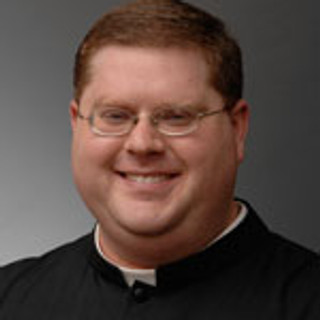
Fr. Scott Haynes
A meditation for November 22, the feast of Saint Cecilia, Virgin and Martyr

At Cecilia’s wedding, there was music. According to the ancient account of her martyrdom, the musicians played while the young Roman bride prayed silently, asking God to preserve the purity of her heart and body. The Church remembers that moment in the antiphon Cantantibus organis. A room full of people heard the wedding music, and God heard the prayer that Cecilia alone could make. Saint Paul gives us the words to understand what she was doing when he speaks of “singing and making melody in your hearts to the Lord” (Ephesians 5:19).¹

The courage to speak of Christ
The Roman Church has honored Cecilia from antiquity, and her name is still spoken in the Roman Canon of the Mass. The details of her life and death come down to us chiefly through the traditional account of her martyrdom. According to that account, she had consecrated her virginity to Christ before her family arranged her marriage to Valerian. On their wedding night, she told him of her consecration and of the angel who guarded her. Valerian wanted to see the angel, and Cecilia directed him to Pope Urban. He received Baptism and, on returning, found Cecilia at prayer with the angel beside her. Valerian’s brother Tiburtius also came to the faith, and both brothers eventually gave their lives for Christ.²
Consider what it cost Cecilia to speak that first evening. Valerian could have received her words with anger or ridicule, and she had no assurance that he would understand. Yet she entrusted him with the truth about her life and showed him where he could learn about Christ. We sometimes pray for someone’s conversion while passing over the ordinary occasions when we could speak of the faith with affection and simplicity. It may be as simple as telling a friend why we still go to Mass in a season of grief, or inviting someone who has been away from the Church to come with us. We can make the invitation with love and give the other person time to answer.

Cecilia’s purity was expressed in her consecrated virginity. For every Christian, whatever our state of life, purity asks for an undivided heart, one that honors the promises we have made and refuses to treat another person as an object for our use. Cecilia’s vows governed the conversation she had in private with Valerian, just as her faith would govern the answers she gave in public before a judge. When our faith costs us something in private, we are already learning the fidelity we will need when the cost becomes public.
What Cecilia did with her last three days
After Valerian and Tiburtius were put to death, the prefect Almachius condemned Cecilia. According to the traditional account, he had her shut inside the intensely heated bath chamber of her own house, intending her to die there by suffocation. When she survived, he sent an executioner to behead her. Three blows wounded her mortally, and the executioner left her still alive. Cecilia lingered for three days. In the time that remained, she entrusted the Christians she had brought to the faith to Pope Urban, gave her possessions to the poor, and asked that her house be made a church.³

There is a particular tenderness in the thought of Cecilia remembering the poor as death approached. She had been accustomed to feeding them, and she knew that after her death their hunger would remain. She used the little time left to see that they would be cared for. Her fortitude took the form of attention to another person’s need while she herself had every reason to think of her pain. We can ask for a share in that fortitude when illness, grief, or exhaustion makes our world grow small. Sometimes it takes real courage to thank the person who is caring for us, or to ask who will bring supper to the neighbor we can no longer visit.

Beneath the high altar of Santa Cecilia in Trastevere, Stefano Maderno’s marble sculpture shows her lying on her side, her knees slightly drawn up and her face turned away. A wound is visible at her neck. Maderno carved the figure after her tomb was opened in 1599 and recorded that he had represented her as he saw her. Look closely at the hands. The thumb and two fingers of the right hand are extended, and on the left hand only the index finger is extended. Christian tradition sees in that gesture a final profession of faith in the Holy Trinity, three divine Persons in one God.⁴

At her wedding, those around Cecilia could hear the instruments, while God heard the prayer she made in silence. At the end of her life, tradition remembers that same faith in the small movement of a dying woman’s hands. What do our own hands say about the faith we profess with our lips? When we make the Sign of the Cross, we name the Father, the Son, and the Holy Spirit. Then we go back to the work those same hands have to do. They may steady someone who is frail, prepare food for a family, write a word of encouragement, or turn the pages of a score so others can sing. In such ordinary ways, the faith we confess in prayer becomes something another person can receive from us.
The patroness of musicians and a friend to those who write
Cecilia’s association with music grew from the account of her wedding prayer, retold in the liturgy and depicted by artists who placed an organ beside her or in her hands. That quiet scene has inspired remarkably different works, from Henry Purcell’s Hail, Bright Cecilia to Handel’s setting of John Dryden’s “A Song for St. Cecilia’s Day” and Benjamin Britten’s Hymn to St Cecilia, with words by W. H. Auden. Her feast brings together the people who write the words, those who set them to music, those who make the instruments, and those who give the music life through their voices and hands.⁵
The litany in the Saint Cecilia Novena invokes her in a special way for “singers, musicians, authors, and students.”⁶ A church musician might ask Cecilia for the patience to rehearse a difficult phrase until the words of the psalm can be heard clearly, and for the recollection to pray those words while attending to pitch and tempo. An author might ask her for the honesty to revise a sentence that sounds beautiful but says something careless or unfair. A student might ask to love the truth enough to admit a misunderstanding and begin again. In each of these ordinary acts, a gift is being prepared for someone else to receive.
Saint Augustine told his hearers to praise God with their voices, their hearts, and their lives.⁷ On Cecilia’s feast, we might bring one line from the Mass into the rest of the day and give it a concrete form. If we sang “Lord, have mercy,” there may be someone at home to whom we can speak more mercifully. If we sang “Thanks be to God,” there may be someone whose quiet work we have taken for granted and can finally thank. And if we can hardly bring ourselves to sing because of some sorrow we are carrying, we can still offer Christ the prayer Cecilia offered amid the wedding music, a prayer heard by him alone.

Prayer
Saint Cecilia, faithful virgin and martyr, pray for us when we are afraid to speak of Christ and when suffering makes it difficult to attend to the needs of others. Pray for those who sing and play, for those who compose and write, and for those who teach and study. May the Lord give us pure hearts, patience in our work, and charity toward those who receive it. When our voices fall silent, may our lives continue to praise him. Amen.
Notes
John A. Rice, “Wedding Music: Retelling the Passio in Medieval and Early Renaissance Liturgy, Literature, and Art,” in Saint Cecilia in the Renaissance: The Emergence of a Musical Icon (University of Chicago Press, 2022). Oxford Academic.
Vatican City State, “22 November: Saint Cecilia, Virgin and Martyr.” Vatican City State. See also Johann Peter Kirsch, “St. Cecilia,” in The Catholic Encyclopedia, vol. 3 (Robert Appleton Company, 1908). New Advent.
Vatican News, “St. Cecilia, Virgin and Martyr in the Cemetery of Callistus.” Vatican News. See also Jacobus de Voragine, “The Life of S. Cecilia,” in The Golden Legend, trans. William Caxton, vol. 6, 141. Christian Classics Ethereal Library.
Ministero della Cultura, “La fortuna iconografica della Santa Cecilia,” Catalogo Generale dei Beni Culturali. Catalogo Generale dei Beni Culturali. See also “Stefano Maderno, St. Cecilia,” Christian Iconography, and Vatican News, “St. Cecilia, Virgin and Martyr.” Christian Iconography.
Rice, “Wedding Music.” See also WFMT, “A Song for Saint Cecilia,” November 22, 2025, and Boosey & Hawkes, “Benjamin Britten: Hymn to St Cecilia.” WFMT · Boosey & Hawkes.
Rev. Scott Haynes, “Saint Cecilia Novena,” Mystical Theology of the Mass. Saint Cecilia Novena.
Augustine, Sermon 34.1–3, 5–6, in Corpus Christianorum, Series Latina 41:424–26. Vatican translation.


Comments