


The Secret Room of the Heart
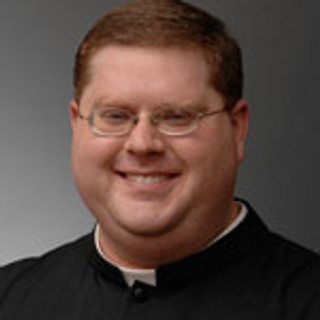
Rev. Scott A. Haynes
A Meditation for Ash Wednesday on Matthew 6:1–6, 16–18

On Ash Wednesday, the Church marks our foreheads with ashes and speaks the solemn words:
“Remember, man, that thou art dust, and unto dust thou shalt return.”
The liturgy begins with truth. We are reminded of our weakness, our mortality, and our need for God.
Yet on this very day, we recall the Gospel which speaks not of outward signs, but of hidden things. Our Lord directs us toward the secret life of the soul.
He says:
“But when thou shalt pray, enter into thy chamber, and having shut the door, pray to thy Father in secret: and thy Father who seeth in secret will repay thee.” (Matthew 6:6)
To the first hearers of Christ’s words, this instruction carried both a literal and a symbolic meaning. The word used in the Gospel refers to an inner room, a private chamber within a house. It was the most hidden place, where no one else could see. Our Lord contrasts this secrecy with the public display of the hypocrites, who loved to be seen praying in the streets and synagogues.
Yet the Jewish world of Christ also knew a practice that helped create such a hidden space even in the midst of a crowd. Devout men prayed with a fringed garment in obedience to the Law of Moses, which commanded the people of Israel to wear tassels on the corners of their garments as a reminder of God’s commandments. Over time, this garment developed into what is known as the tallit, or prayer shawl.
In many Jewish traditions, the worshipper would draw the tallit over his head while praying. Rabbinic commentators explained this practice as a sign of humility before God, a means of focusing the mind, and even as a symbolic tent or sacred enclosure. Beneath the shawl, the world was shut out. The eyes saw only the sacred words of prayer, and the soul stood alone before the Lord. The cloth created a small sanctuary, a hidden place where one could meet God without distraction.
Whether Our Lord directly referred to this custom or not, the image is deeply harmonious with His teaching. The shawl formed a kind of portable chamber, but Christ directs us to something deeper. The true secret room is not made of cloth or stone. It is the heart.
This is how the Fathers of the Church understood His words. St. Augustine, reflecting on this passage, gave a spiritual interpretation that has guided Christians ever since. He wrote:
“Enter into thy chamber, that is, into thy heart… and shut the door, that is, withdraw from the senses of the body.”
For Augustine, the chamber was not a physical place at all. It was the interior life, the hidden sanctuary where the soul meets God.
The door that must be shut is not a wooden door, but the door of distraction, vanity, and the need for human approval. To close the door is to turn away from the noise of the world, from the desire to be praised, and from the restless movements of the senses. It is to seek God alone, for His own sake.
Ash Wednesday calls us into that secret room. The ashes placed upon our foreheads are visible, but their meaning is inward. They remind us that the Christian life is not about appearances. It is about conversion of heart.
In the Gospel, Our Lord speaks of three Lenten practices: prayer, fasting, and almsgiving. In each case, He repeats the same warning. Do not do these things to be seen. Do not pray for admiration. Do not fast for recognition. Do not give alms for applause. Instead, do everything in secret, where only the Father sees.
God is not impressed by display. He looks into the hidden places of the soul. He sees the quiet prayer whispered at the end of a long day. He sees the sacrifice that no one else notices. He sees the small act of charity done without recognition. These are the treasures of Lent.
The prayer shawl, when drawn over the head, symbolized a withdrawal from the world. In a similar way, Lent draws a veil over the soul. It invites us into silence. It calls us to step away from noise, distraction, and self-display, and to enter the inner chamber of the heart.
Perhaps this means rising a few minutes earlier each day for silent prayer. Perhaps it means turning off distractions in order to read the Gospel. Perhaps it means offering a hidden sacrifice that no one else will ever know. These small acts are like drawing a spiritual shawl over the soul. They create a sacred enclosure where we can stand alone before God.
Our Lord repeats a promise:
“Thy Father who seeth in secret will repay thee.”
The reward is not always visible. It is often quiet and interior. It may come as a deeper peace, a stronger trust, a more generous heart, or a silent joy that the world cannot give. The saints testify that the hidden life with God becomes the greatest treasure of all.
On this Ash Wednesday, imagine drawing a prayer shawl over your heart. Step into that secret chamber where no one sees but God. Close the door. Speak to Him honestly. Listen in silence. The Father who sees in secret is already waiting there.
Bibliography
Augustine of Hippo. Sermon on the Mount. In Nicene and Post-Nicene Fathers, First Series, Vol. 6. Edited by Philip Schaff. Buffalo, NY: Christian Literature Publishing Co., 1888.
Cohen, Shaye J. D. From the Maccabees to the Mishnah. Louisville: Westminster John Knox, 1987.
Edersheim, Alfred. The Life and Times of Jesus the Messiah. Grand Rapids: Eerdmans, reprint edition.
Jeremias, Joachim. Jerusalem in the Time of Jesus. Philadelphia: Fortress Press, 1969.
Neusner, Jacob, trans. The Mishnah: A New Translation. New Haven: Yale University Press, 1988.
Mishnah: Menachot (Tractate on offerings and fringes).
The Holy Bible. Douay-Rheims Version. 1899 American Edition.



Comments