


Mary, the Aqueduct of Grace
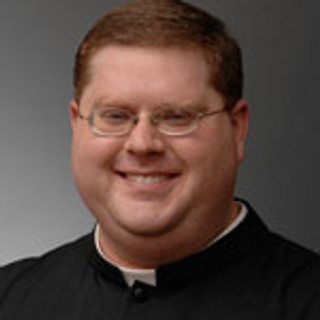
Fr. Scott Haynes

Christ is the sole Mediator between God and man. Sacred Scripture speaks with absolute clarity: “For there is one God, and one mediator of God and men, the man Christ Jesus” (1 Tim. 2:5). His mediation is unique because it flows from His divine Person and His redemptive sacrifice. No creature can stand beside Him as an equal, nor can any add to the saving power of His Cross.
Yet the same St. Paul who proclaims Christ as the one Mediator also teaches that God freely wills a subordinate, participated mediation within the Body of Christ. He urges the faithful to offer “supplications, prayers, intercessions” for others (1 Tim. 2:1). He describes himself as a “minister of reconciliation” (2 Cor. 5:18). He even dares to say that he “fills up what is lacking in the sufferings of Christ” in his own flesh (Col. 1:24), not because Christ’s sacrifice is insufficient, but because its fruits are applied through the living members of His Body.
Christ’s mediation is therefore not isolated. It is communicated, shared, and extended by grace, without ever being rivaled or diminished. This Pauline principle is the essential key for understanding Mary.
St. Bernard of Clairvaux and the Aqueduct of Grace
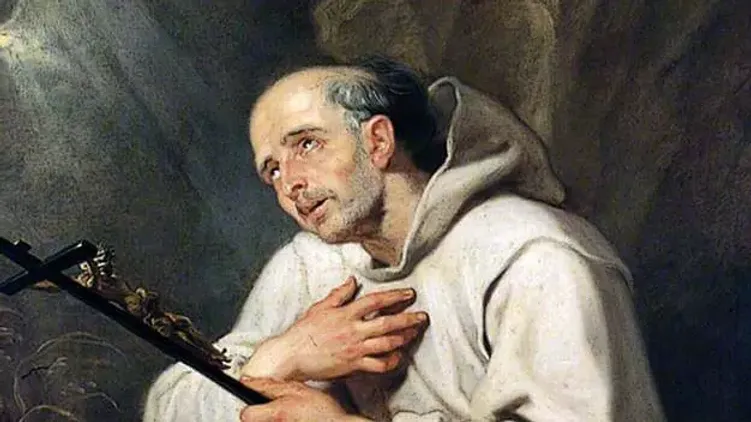
No saint expressed this mystery with greater clarity and beauty than St. Bernard of Clairvaux. In his sermon on the Nativity of the Blessed Virgin Mary, traditionally known as De aquaeductu, Bernard offers one of the most enduring Marian images in the Church’s tradition.
Christ, Bernard teaches, is the fountain, the living and inexhaustible source of grace. From Him alone flows the water of eternal life, in harmony with Scripture’s proclamation: “Of His fullness we have all received, grace for grace” (Jn 1:16). Mary, however, is the aqueduct chosen by God to convey that grace to the world.
An aqueduct does not generate water. It does not possess the source. Its dignity lies entirely in its function: to reach upward toward the fountain and to carry what it receives downward to those in need. So it is with Mary. She does not originate grace; she receives it. She does not command it; she transmits it. She does not replace Christ; she leads to Him.
Bernard deepens the image by showing that Mary’s role as aqueduct is not passive or mechanical. She rises toward the heavenly source through humility, purity, prayer, and total openness to God. Her soul, as it were, ascends to God so that grace may descend to humanity. In this way, Mary resembles Jacob’s ladder (Gen. 28:12), the mysterious stairway joining heaven and earth, upon which divine gifts descend and human prayers ascend.
Here Bernard touches something profound. Mary is “full of grace,” yet she never ceases to seek grace. Because she continually receives, she continually overflows. What fills her does not remain in her. It pours out for the life of the Church. This dynamic movement—reception and overflow—is the heart of her mediating role.
Mary as Mediatrix
Within this divinely ordered economy, the Church rightly speaks of Mary as Mediatrix, always in a subordinate and participated sense. The title does not place her alongside Christ as a second mediator, nor does it suggest that grace originates from her. Rather, it expresses the truth that God has freely willed Mary’s maternal intercession to be the ordinary human means through which the graces merited by Christ are applied to souls. Just as St. Paul teaches that Christians share in Christ’s work of reconciliation through prayer, sacrifice, and love, so Mary shares in it in a singular and eminent way, because her cooperation was unique in intimacy and scope.
As St. Bernard’s image makes clear, Mary is Mediatrix precisely because she is the aqueduct: what she receives from Christ she gives entirely to the Church. Her mediation depends wholly on Him, draws all its power from His merits, and leads unfailingly back to Him. Thus, to call Mary Mediatrix is not to limit Christ’s mediation, but to confess the generosity of that mediation, which wills to reach us through the Mother He Himself gave us.
Mary and Pauline Participation in Mediation
St. Bernard’s theology harmonizes seamlessly with St. Paul. If God chooses to apply redemption through human cooperation—through prayer, suffering, evangelization, and love—then it is fitting that the most complete cooperation should belong to the woman through whom the Redeemer entered history.
Mary’s Fiat at the Annunciation is the highest expression of what St. Paul describes elsewhere as “the obedience of faith” (Rom. 1:5). Through her consent, the Incarnation becomes possible. Since every grace flows from the Incarnate Word, Mary stands at the threshold of the entire economy of grace, not as its source, but as its first recipient and chosen instrument.
What is true, in a limited way, of every Christian who prays or intercedes is true eminently of Mary. She is not outside the Church’s mediating prayer. She is at its summit.
Patristic Witness: Mary’s Saving Cooperation
St. Bernard gives mature expression to insights already present in the early Church.
St. Irenaeus of Lyons taught that the knot of Eve’s disobedience was untied by the obedience of Mary. Where Eve’s cooperation contributed to death, Mary’s cooperation served life. God, who could have saved humanity without a woman, chose instead to redeem it through the obedient faith of one.
St. Ephrem the Syrian sang of Mary as the channel through which blessing returned to a world emptied by sin. His hymns present grace as something that flows through her because Christ first flowed into the world through her.
St. Augustine of Hippo taught that Mary “cooperated by charity” in the birth of the faithful. Since believers are members of Christ’s Body (1 Cor. 12:27), the Mother of the Head is also the Mother of the members. Her spiritual motherhood necessarily includes intercession.
Biblical Shape of Marian Mediation
Scripture presents Mary’s role not as a later theological invention, but as a pattern embedded in salvation history.
At the Annunciation (Luke 1), heaven waits for Mary’s consent. The source of all grace enters the world through her Fiat. At the Visitation, grace reaches John the Baptist through Mary’s presence. At Cana (John 2), Mary intercedes, and Christ responds, inaugurating His signs. At the Cross (John 19), Mary is given as Mother to the beloved disciple, a moment the Church has always understood as the extension of her motherhood to all who belong to Christ.
After the Ascension, Mary prays with the Church as it awaits the Spirit (Acts 1:14). She stands within the praying Body, never replacing Christ, but always oriented toward Him.
Old Testament Figures that Prepare the Mystery
The Old Testament prepares for Mary’s role through figures and patterns.
The Queen Mother (Gebirah) of the Davidic kingdom holds a recognized place of intercession before the king (1 Kings 2). This royal structure finds its fulfillment in Mary, Mother of the Messianic King, whose influence is maternal rather than political.
The Ark of the Covenant bears God’s presence and brings blessing wherever it goes (2 Sam. 6). St. Luke’s Gospel deliberately echoes this imagery, presenting Mary as the living Ark who bears not the law written on stone, but the Word made flesh. Wherever the Ark rests, grace flows.
Magisterial Confirmation
The Church’s teaching faithfully preserves this biblical and patristic balance.
The Council of Trent affirmed that the saints intercede for the faithful and that invoking them does not detract from Christ’s unique mediation. The Second Vatican Council, in Lumen gentium §§60–62, teaches that Mary’s maternal role in the order of grace in no way obscures or diminishes the mediation of Christ, but rather manifests its power. Her influence depends entirely on Him and draws all its efficacy from His merits.
Conclusion
Christ is the sole Mediator by nature and merit. Christians share in His mediation by participation, as St. Paul teaches. Mary shares in it by excellence, because her cooperation in salvation was unique, total, and maternal.
St. Bernard’s image of the aqueduct captures this mystery with luminous simplicity. All grace comes from Christ alone, yet God has willed that it should flow to us through the Mother who gave Him flesh, stood beneath His Cross, and now intercedes for His Body in glory.
Christ is the Source.
Mary is the Aqueduct.
The grace is His.
The tenderness is hers.
Bibliography
Augustine of Hippo. De sancta virginitate. In Patrologia Latina, vol. 40. Paris: J.-P. Migne, 1845.
Bernard of Clairvaux. Homilies in Praise of the Blessed Virgin Mary. In Patrologia Latina, vol. 183. Paris: J.-P. Migne, 1854.
Bernard of Clairvaux. Sermon on the Nativity of the Blessed Virgin Mary (De aquaeductu). In Sancti Bernardi Opera, vol. 4. Rome: Editiones Cistercienses, 1966.
Bernard of Clairvaux. Sermons on the Blessed Virgin Mary. Translated by Marie-Bernard Saïd. Kalamazoo, MI: Cistercian Publications, 1970.
Congregation for the Doctrine of the Faith. Norms for Proceeding in the Discernment of Alleged Private Revelations. Vatican City, 1978.
Council of Trent. Decree on the Invocation, Veneration, and Relics of Saints (Session XXV). In The Canons and Decrees of the Council of Trent. Translated by H. J. Schroeder. Rockford, IL: TAN Books, 1978.
De Fiores, Stefano. Mary: Mother of Jesus. Translated by M. J. O’Connell. New York: Alba House, 1993.
Ephrem the Syrian. Hymns on the Nativity. Translated by Kathleen E. McVey. New York: Paulist Press, 1989.
Garrigou-Lagrange, Reginald. The Mother of the Savior and Our Interior Life. St. Louis: B. Herder Book Co., 1948.
Hahn, Scott. Hail, Holy Queen: The Mother of God in the Word of God. New York: Doubleday, 2001.
Hahn, Scott, and Curtis Mitch. The Gospel of Luke. Ignatius Catholic Study Bible. San Francisco: Ignatius Press, 2001.
Irenaeus of Lyons. Against Heresies. Translated by Dominic J. Unger and John J. Dillon. New York: Paulist Press, 1992.
John Paul II. Redemptoris Mater. Vatican City: Libreria Editrice Vaticana, 1987.
Leo XIII. Octobri mense. Vatican City: Libreria Editrice Vaticana, 1891.
Pius X. Ad diem illum. Vatican City: Libreria Editrice Vaticana, 1904.
Pius XII. Mystici Corporis Christi. Vatican City: Libreria Editrice Vaticana, 1943.
Scheeben, Matthias Joseph. Mariology. Translated by Thomas L. Mullaney. St. Louis: B. Herder Book Co., 1946.
Second Vatican Council. Lumen gentium. In Vatican Council II: The Conciliar and Postconciliar Documents. Edited by Austin Flannery, O.P. Collegeville, MN: Liturgical Press, 1992.
The Holy Bible. Douay-Rheims Version. 1899 American Edition.


Comments