


What We Sow, We Reap
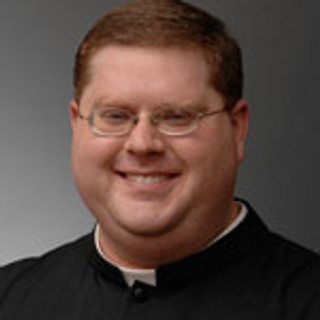
Fr. Scott Haynes

A Meditation on Galatians 6:8
“For he that soweth in his flesh, of the flesh also shall reap corruption. But he that soweth in the spirit, from the spirit shall reap life everlasting.”— Galatians 6:8
The life of Saint Augustine offers one of the clearest examples of what Saint Paul means when he warns that we reap according to what we sow. Augustine did not suddenly become trapped by sinful habits in a single moment, nor did his conversion occur without a long interior struggle. His life unfolded through a series of choices, first choices that drew him deeper into self-indulgence and confusion, and later choices that opened his heart to grace and gradually transformed him into one of the greatest saints and teachers of the Church.
Augustine himself remembered an incident from his youth that, on the surface, might seem almost insignificant. When he was about sixteen years old, he and several companions stole pears from a neighbor’s tree, not because they were hungry or because the fruit was especially desirable, but because the act of stealing itself gave them a certain thrill. Much of the fruit was simply thrown away or given to pigs. Looking back years later, Augustine understood that what troubled him most was not the value of the pears but the movement of his heart, because he had enjoyed doing what was wrong precisely because it was forbidden, while the presence and approval of his companions made the wrongdoing more attractive.
That small theft became for Augustine an image of a much larger spiritual danger, because it showed how easily the heart can begin to take pleasure in choosing desire over conscience. A single sinful act may pass quickly, yet the habit of yielding to temptation can remain and grow stronger, particularly when the same kind of choice is repeated again and again. Augustine slowly learned to seek satisfaction in what pleased him immediately, even when he knew that those choices were not leading him toward what was truly good.
When he later went to Carthage, the seeds planted in his youth began to produce a larger harvest. Augustine pursued sexual pleasure, intellectual distinction, social advancement, and the admiration of others, while at the same time becoming deeply involved with the Manichaean sect. He entered into a long relationship with a woman to whom he was not married, and he later acknowledged that his desires exercised enormous power over him. He also embraced religious errors that he eventually helped spread to others, using the very intelligence God had given him in ways that drew him farther from the truth.
Here we begin to see what Saint Paul means when he speaks of sowing “in the flesh,” because sin rarely remains a single isolated choice. Repeated choices gradually form habits, habits begin to shape our desires, and desires eventually influence the kind of person we are becoming. At first, we may imagine that we are freely choosing a pleasure, an indulgence, or a compromise, but over time we may discover that the habit itself has begun to exercise power over us.
Augustine came to understand this with painful clarity. As he grew older, he increasingly recognized the truth of Christianity, especially after he moved to Milan and began listening to the preaching of Saint Ambrose. At first Augustine admired Ambrose largely because of his eloquence, but little by little he began to listen not only to how Ambrose spoke but to what he was saying. Many of Augustine’s objections to the Catholic faith began to collapse, and the teachings he had once dismissed began to appear reasonable, coherent, and true.
The difficulty was that Augustine’s mind began to accept the truth before his will was prepared to surrender to it. He was increasingly convinced that Christianity was true, yet he remained frightened by what full conversion would require, because he knew that following Christ would mean abandoning habits and desires to which he had become deeply attached. The problem was no longer simply intellectual. Augustine had begun to see the road toward God, but he also felt the pull of the life he had built through years of repeated choices.
In this sense, the harvest of his earlier sowing had already begun to appear. Years of yielding to desire had made yielding easier, while years of postponing conversion had made delay almost instinctive. Augustine knew that his old life did not satisfy him, yet he also feared giving it up, because habits that are formed gradually can eventually feel like chains. He wanted God, but he also wanted to hold on to the very things that prevented him from giving himself completely to God.
The decisive moment came in Milan in the year A.D. 386, when Augustine was struggling intensely with whether he would finally surrender himself to Christ. He had been speaking with his friend Alypius and had recently heard stories about others who had abandoned worldly ambitions in order to follow God wholeheartedly. Rather than comforting Augustine, these examples disturbed him because they forced him to confront the fact that others were doing what he already knew he should do.
Overcome by the conflict within him, Augustine went into a garden and wept, torn between the life he had known and the life to which God was calling him. He later described the old pleasures of his former life almost as though they were whispering behind him, asking whether he could really leave them forever, while before him stood the beauty of purity, freedom, and complete surrender to God. He had reached the moment when he could no longer pretend that conversion might be endlessly postponed.
While he was in this state of anguish, Augustine heard what sounded like the voice of a child repeating words that he understood as a command to “take and read.” He returned to where he had left a volume containing the writings of Saint Paul, opened it, and read Romans 13:13–14:
“Let us walk honestly, as in the day: not in rioting and drunkenness, not in chambering and impurities, not in contention and envy: But put ye on the Lord Jesus Christ, and make not provision for the flesh in its concupiscences.”
Those words struck directly at the conflict Augustine had been carrying within himself, and he later explained that he did not need to read further because the darkness of uncertainty began to disappear. The grace of God had reached the place in his heart where he had resisted for so long, and Augustine finally stopped bargaining with God about how much of his old life he might keep.
From that point forward, Augustine began sowing very different seeds. He abandoned the pursuit of worldly advancement that had once occupied so much of his attention, prepared himself seriously for Baptism, and allowed Saint Ambrose to instruct him more fully in the Catholic faith. At Easter in A.D. 387, Augustine was baptized, and the gifts he had once used in the service of pride, error, and ambition were gradually redirected toward the service of Christ and His Church.
The transformation was profound because the same brilliant mind that had once defended error would eventually become one of the greatest defenders of Catholic truth, while the man who had struggled so fiercely with disordered desire would become one of Christianity’s great teachers on grace, conversion, the human heart, and the mercy of God. The son whose wandering had caused Saint Monica so many tears would become a priest, a bishop, a preacher, a spiritual father, and one of the greatest Doctors of the Church.
In Augustine’s life we can therefore see both sides of Galatians 6:8 unfolding before us. When he sowed according to the flesh, the harvest was not freedom but bondage, because the desires he repeatedly indulged gradually became harder to resist. When, through the grace of God, he began sowing according to the Spirit, his life moved in another direction as he prayed, listened to the truth, opened himself to Scripture, abandoned sinful habits, submitted himself to the Church, received Baptism, and gave his extraordinary gifts to God.
Augustine’s story gives us a serious warning because it reminds us that small choices do not always remain small. A seed may fit easily into the palm of the hand, yet given time it can become a tree, and something similar happens within the soul whenever we repeatedly feed resentment, impurity, dishonesty, vanity, laziness, gossip, selfishness, or pride. Every choice strengthens something within us, and over time those choices begin to shape our character.
Yet Augustine’s life also gives tremendous hope, because the field of the soul is never beyond the reach of God’s grace. A person may look back and realize that he has already planted many bad seeds, perhaps through years of neglecting prayer, postponing Confession, returning to the same sins, holding on to resentment, or allowing selfish habits to become deeply rooted. Augustine teaches us that such a past does determine the future, because with grace we can begin sowing something different.
We begin by returning to God in the ordinary choices placed before us. We go to Confession when we would rather delay, pray when we do not feel like praying, resist the temptation we usually excuse, forgive the person we would rather resent, perform the duty we have been avoiding, open the Scriptures, spend time before the Blessed Sacrament, or make a hidden sacrifice known only to God. None of these acts may appear dramatic, yet each is a seed, and God can bring from them a harvest far greater than we can see at the moment.
Saint Augustine’s life therefore invites us to ask not only, “What am I doing today?” but also, “What am I becoming through the choices I repeatedly make?” Every day we are sowing something into the soil of the soul, and every repeated choice is preparing a harvest. Augustine learned this first through sin and later through grace, and his life remains a powerful reminder that what we sow today can shape not only tomorrow, but eternity.


Comments