


The Sign of the Cross: A Profession of Catholic Faith
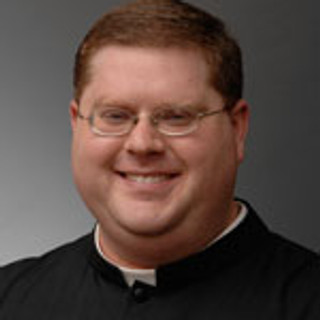
Fr. Scott Haynes

A child learns it at his mother’s knee. A priest traces it over the faithful. A dying Catholic, too weak to speak, may still struggle to raise his hand and make it once more. The Sign of the Cross accompanies us through life, giving visible expression to the faith we profess: we belong to the Father, the Son, and the Holy Ghost, and our salvation comes through Jesus Christ crucified.
Yet familiarity can dull our attention. The hand moves while the mind wanders. We begin our prayers without considering the tremendous mystery we have just traced upon our bodies.
Our confidence in the Cross rests upon the saving work of Christ. St. Paul declares:
“But we preach Christ crucified” (1 Corinthians 1:23).
These words bring us to the heart of Christian life. The Lord who suffered for us is the Lord to whom we entrust our bodies, our souls, our families, and our daily bread.¹
A Prayer Written upon the Body
When we make the Sign of the Cross, our bodies participate in prayer. We invoke the Blessed Trinity while tracing the sign of our redemption. In one brief action, we profess mysteries upon which a lifetime of contemplation could be spent.
St. Basil the Great, writing in the fourth century, includes signing oneself with the Cross among the practices received through the Church’s unwritten apostolic tradition. His testimony shows how deeply this gesture belonged to Christian life long before the divisions of later centuries.²
St. Cyril of Jerusalem gives an equally vivid witness. He urges Christians to make the sign over their food and drink, when entering and leaving, before sleep, and upon rising. His instruction begins with an appeal that still speaks to timid hearts:
“Let us not then be ashamed to confess the Crucified.”³
Imagine taking that counsel seriously. The morning would begin with an act of belonging to Christ. A meal would become an occasion of thanksgiving. The departure for work would include a prayer for guidance. Night would close with an act of trust.
These moments need not be elaborate. A few seconds of recollection can open the ordinary duties of the day to God.
Grace at the Family Table
The custom of praying before meals teaches a lesson that comfort easily obscures: we are creatures receiving gifts.
We may have earned the wages and prepared the meal, but we did not create the earth, summon the rain, or give ourselves life. Thanksgiving restores our sense of dependence upon God. It also reminds us that the hungry are our brothers and sisters.
St. Paul writes of food received gratefully:
“For it is sanctified by the word of God and prayer” (1 Timothy 4:5).
In its context, this teaching affirms the goodness of God’s creation against those who wrongly condemn it. It gives Christians a firm foundation for receiving their food with prayerful gratitude.⁴
At a family table, this becomes a quiet school of faith. Children see that even hunger can wait a moment while God is thanked. Parents acknowledge that their household lives beneath His providence. Guests encounter a faith expressed naturally in daily life.
A hurried blessing can gradually become more attentive. Put down the utensils. Make the Sign of the Cross deliberately. Say the prayer together. Remember those who have nothing to eat, and let that remembrance bear fruit in generosity.
Reverence and Trust
The Church’s sacramentals bring prayer into the circumstances of ordinary life. Blessings, holy water, and sacred signs direct us toward God and prepare us to receive His grace. Their spiritual fruit comes through Christ and the prayer of His Church. They do not confer grace in the same manner as the sacraments.⁵
This distinction protects devotion from superstition. The Catechism warns against attributing the efficacy of prayers or sacred signs merely to their outward performance, apart from the interior dispositions they require.⁶
We should therefore make the Sign of the Cross carefully because we love God and wish to pray attentively. We need not become anxious that an imperfect movement of the hand has defeated our prayer. The trembling fingers of an elderly believer can express profound faith.
Carrying the Cross into Daily Life
The sign we trace upon ourselves also makes a claim upon our conduct.
Hands that have marked the Cross should be ready to serve. Lips that have invoked the Holy Trinity should resist gossip and cruelty. A heart entrusted to Christ should become more willing to forgive.
Before a difficult conversation, make the Sign of the Cross and ask for patience. When tempted, turn to the crucified Lord for strength. In suffering, place yourself beneath His mercy. Before going to confession, ask for the courage to tell the truth about your sins.
Such prayer leads us further into the sacramental life of the Church. Its fruit should appear in repentance, charity, fidelity to Mass, and a deeper hunger for Holy Communion.
St. Paul gives us words to carry within this familiar gesture:
“But God forbid that I should glory, save in the cross of our Lord Jesus Christ” (Galatians 6:14).⁷
The next time your hand rises to your forehead, pause inwardly. Remember whose name you invoke and whose love has redeemed you.
Then make the Sign of the Cross as an act of faith, gratitude, and surrender. Let the prayer your hand traces become the life you offer.
Notes
1 Corinthians 1:23.
Basil of Caesarea, On the Holy Spirit 27.66, trans. Blomfield Jackson, in Nicene and Post-Nicene Fathers, 2nd ser., vol. 8, ed. Philip Schaff and Henry Wace (Buffalo, NY: Christian Literature Publishing Co., 1895).
Cyril of Jerusalem, Catechetical Lectures 13.36, trans. Edwin Hamilton Gifford, in Nicene and Post-Nicene Fathers, 2nd ser., vol. 7, ed. Philip Schaff and Henry Wace (Buffalo, NY: Christian Literature Publishing Co., 1894).
1 Timothy 4:3–5.
Catechism of the Catholic Church, 2nd ed. (Washington, DC: United States Catholic Conference, 2000), nos. 1667–71.
Catechism of the Catholic Church, no. 2111.
Galatians 6:14.


Comments