


The Road to Emmaus as an Image of the Mass
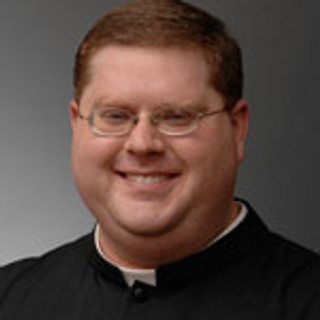
Fr. Scott Haynes

A Meditation on Luke 24:13-35
And behold, two of them went, the same day, to a town which was sixty furlongs from Jerusalem, named Emmaus. And they talked together of all these things which had happened. And it came to pass, that while they talked and reasoned with themselves, Jesus himself also drawing near, went with them.
But their eyes were held, that they should not know him. And he said to them: What are these discourses that you hold one with another as you walk, and are sad? And the one of them, whose name was Cleophas, answering, said to him: Art thou only a stranger to Jerusalem, and hast not known the things that have been done there in these days? To whom he said: What things? And they said: Concerning Jesus of Nazareth, who was a prophet, mighty in work and word before God and all the people; And how our chief priests and princes delivered him to be condemned to death, and crucified him.
But we hoped, that it was he that should have redeemed Israel: and now besides all this, today is the third day since these things were done. Yea and certain women also of our company affrighted us, who before it was light, were at the sepulchre, And not finding his body, came, saying, that they had also seen a vision of angels, who say that he is alive. And some of our people went to the sepulchre, and found it so as the women had said, but him they found not. Then he said to them: O foolish, and slow of heart to believe in all things which the prophets have spoken.
Ought not Christ to have suffered these things, and so to enter into his glory? And beginning at Moses and all the prophets, he expounded to them in all the scriptures, the things that were concerning him. And they drew nigh to the town, whither they were going: and he made as though he would go farther. But they constrained him; saying: Stay with us, because it is towards evening, and the day is now far spent. And he went in with them. And it came to pass, whilst he was at table with them, he took bread, and blessed, and brake, and gave to them.
And their eyes were opened, and they knew him: and he vanished out of their sight. And they said one to the other: Was not our heart burning within us, whilst he spoke in this way, and opened to us the scriptures? And rising up, the same hour, they went back to Jerusalem: and they found the eleven gathered together, and those that were staying with them, Saying: The Lord is risen indeed, and hath appeared to Simon. And they told what things were done in the way; and how they knew him in the breaking of the bread.
The Gospel of the disciples on the road to Emmaus (Luke 24:13–35) is one of the most beautiful Resurrection narratives in all of Scripture. But it is more than a story of consolation after sorrow. It is also a mysterious image of the Holy Sacrifice of the Mass. In this sacred episode, the risen Lord leads two bewildered disciples through a movement that resembles the structure of the traditional Latin Mass: penitential preparation, instruction in the divine word, the awakening of faith, the holy mystery of the breaking of bread, and the sending forth of transformed witnesses.
The scene begins in sadness. Two disciples are leaving Jerusalem. Their steps are heavy, their hopes seem broken, and their conversation is full of confusion. They have heard reports, but they do not yet understand. Their minds are clouded by grief. Their eyes are “held” so that they do not recognize Him. This opening atmosphere is important. Christ does not first reveal Himself in glory. He first finds them in weakness.
Here we may see something like the spiritual atmosphere of the prayers at the foot of the altar. Before the priest ascends to the holy place, there is an act of humility. He does not stride thoughtlessly into the sanctuary. He confesses sin. He bows low before God. The Confiteor is the cry of one who knows his unworthiness and asks mercy before approaching the mysteries. So too at Emmaus, the disciples begin not in triumph, but in poverty of soul. They are like men standing below the altar steps, not yet ready to enter the holy place. Christ first draws out their inward condition. “What are these discourses that you hold one with another as you walk, and are sad?” He asks not because He does not know, but because they must speak their sorrow in His presence. He leads them to acknowledge their darkness, their disappointment, and their blindness. This is not yet the Eucharistic climax. It is a penitential threshold. It resembles the soul’s first work at Mass: to come honestly before God, burdened, humbled, and in need of grace.
Then comes the ascent into instruction, what corresponds to the Mass of the Catechumens. Once He has drawn out their sadness, Our Lord begins to illumine their minds. He reproves them gently: “O foolish, and slow of heart to believe in all things which the prophets have spoken.” Then Saint Luke tells us: “And beginning at Moses and all the prophets, he expounded to them in all the scriptures, the things that were concerning him.” Here Christ acts as the divine Teacher. He opens revelation. He shows that the Law and the Prophets find their fulfillment in His Passion and glory. The minds of the disciples, once scattered and darkened, begin to be recollected and instructed.
This is profoundly like the first principal part of the traditional Mass. In the Mass of the Catechumens, the soul is led by the sacred lessons toward Christ. The Epistle and Gospel are not mere readings laid side by side. They form part of a holy ascent. God speaks. Christ teaches. The Church listens. The faithful are prepared for the altar by divine truth. So at Emmaus, the risen Lord performs this sacred office Himself. He opens the Scriptures before He opens their eyes. He teaches before He feeds. He forms their minds before He reveals Himself in the breaking of bread.
And here one may also perceive a connection to the Credo, at least in spiritual substance. The Credo in the Mass is the Church’s solemn profession of faith after hearing the revealed word. Having listened to what God has spoken, the Church answers with belief. She confesses the mysteries she has received. At Emmaus, the disciples do not recite a formal creed, but the whole scene is ordered toward this same awakening of faith. Their problem, after all, is not merely ignorance. It is slowness to believe. Christ’s rebuke touches precisely that point: they have not yet assented fully to the testimony of the prophets and to the necessity of His suffering. His exposition of Scripture is therefore not only instruction; it is the re-formation of faith within them. Their hearts burn because belief is being rekindled. The Emmaus journey contains, in seed, the same inner movement that the Credo expresses in liturgical form: the soul, having heard the word of God, rises to confess and embrace it. One could say that before the disciples recognize Him sacramentally, they are being led back into the obedience of faith.
That phrase of the disciples, “Was not our heart burning within us, whilst he spoke in the way, and opened to us the scriptures?” is especially significant. The Mass of the Catechumens is not merely instructional in an academic sense. It is meant to enkindle the soul. The truth of God is living and warm. It reproves, enlightens, and inflames. So too on the road. Their hearts begin to burn before their eyes are opened. There is a holy order here. First the ear is instructed, then the heart is kindled, then the mystery is revealed.
When they draw near the village, the disciples beg Him: “Stay with us, because it is towards evening, and the day is now far spent.” This is a tender and important turning point. They no longer want only discourse. They want His presence. The word has awakened desire. Instruction has given way to longing. This corresponds beautifully to the transition from the Mass of the Catechumens to the Mass of the Faithful. Doctrine leads to adoration. The Scriptures lead to the altar. Truth opens into communion.
Then comes the climax: “And it came to pass, whilst he was at table with them, he took bread, and blessed, and brake, and gave to them.” These actions are unmistakably Eucharistic. He took. He blessed. He broke. He gave. This is not described as a mere ordinary meal. Saint Luke deliberately uses the gestures that recall the sacred action of Christ at the Last Supper. And the disciples themselves later refer to this moment as “the breaking of bread,” language deeply associated in the New Testament with the Eucharistic mystery. Here, then, is the image of the Mass of the Faithful. The One who opened the Scriptures now gives Himself in sacramental sign. The One who taught as Prophet now acts as Priest.
And now the decisive moment arrives: “And their eyes were opened, and they knew him.” It is in the breaking of bread that recognition becomes full. On the road they knew Him dimly through doctrine; at table they know Him intimately in mystery. So also in the Mass. Christ is truly present in the proclamation of the Gospel, but He is known most profoundly and substantially in the Blessed Sacrament, on the altar of sacrifice. Emmaus reveals the same sacred progression found in the Mass: first the word, then the mystery; first instruction, then communion; first the burning heart, then the opened eyes.
There is also a profoundly sacrificial aspect to this. Emmaus is not simply about fellowship. The Christ who breaks bread is the Christ who has just explained that “it behoved Christ to suffer, and so to enter into his glory.” His risen presence cannot be detached from His Passion. The breaking of bread is illumined by Calvary. So too the Mass is not only a banquet. It is the unbloody renewal and representation of the Sacrifice of the Cross. The risen Christ is encountered in sacramental form, but always as the Lamb who was slain.
Then comes one of the most moving details in the entire Gospel: “and he vanished out of their sight.” This too has a Eucharistic resonance. Christ withdraws from ordinary visible presence at the very moment He is recognized in the sacred action. He teaches them that henceforth they must know Him no longer according to the flesh, but sacramentally, liturgically, mystically, by faith. He will not continue to walk beside them in the same outward way. Yet He will remain with His Church in a deeper way, above all in the holy mysteries. The disappearance is not absence. It is a transition from one mode of presence to another.
And now we come to the end, which indeed suggests a connection to Ite, missa est and Deo gratias. The Mass does not end in private sweetness. It ends in mission. Having received the mystery, the faithful are sent. This is exactly what happens at Emmaus. The two disciples do not remain seated in quiet sentiment. They rise up the same hour and return to Jerusalem. Night has fallen, the road is long, but joy makes them swift. They must go back. They must tell the others. They must bear witness that the Lord is risen and that they knew Him in the breaking of bread.
This is the spirit of Ite, missa est. The Church, having heard the word and received the mystery, is sent forth. The Mass is ended, but not in the sense of being merely over. Rather, the faithful are commissioned. They are sent into the world carrying what they have received. Emmaus ends in precisely that way: the disciples are dismissed by grace itself into apostolic action. And their whole being answers, as it were, with Deo gratias. Their return to Jerusalem is itself a thanksgiving. They go back not with reluctance, but with gratitude, wonder, and praise. The proper fruit of Mass is not only reverence during the rite, but transformed life after it.
So the whole scene may be seen in this order:
The sorrowful and confused disciples correspond to the soul approaching the holy mysteries in humility and need. Christ’s questioning and uncovering of their grief resemble, in spirit, the penitential preparation and the Confiteor, by which the soul acknowledges its poverty before ascending the altar. His opening of Moses and the Prophets corresponds to the Mass of the Catechumens, where Christ teaches through the sacred word. The rekindling of their faith corresponds spiritually to the Credo, the soul’s assent to the truth revealed by God. Their plea, “Stay with us,” marks the longing transition from hearing to communion. The taking, blessing, breaking, and giving of bread correspond to the Mass of the Faithful, where Christ is known in sacramental mystery. Their opened eyes show the grace of Eucharistic recognition. His vanishing teaches the new mode of knowing Him by faith in the mysteries. Their immediate return to Jerusalem reflects the sending forth of Ite, missa est, and their joyful witness is the living echo of Deo gratias.
Thus the road to Emmaus is not only a Resurrection appearance. It is a revelation of the way the risen Christ continues to meet His Church. He first humbles the soul, then teaches it, then leads it into the obedience of faith, then reveals Himself in the sacred breaking of bread, and finally sends it forth transformed. In this sense, Emmaus is indeed a hidden Mass on the move: the traditional structure of the Holy Sacrifice shimmering through a Gospel scene of sorrow turned to flame, and flame turned to recognition, and recognition turned to mission.
Books from Priestly Press


Comments