


Whatsoever is Born of God Overcometh the world
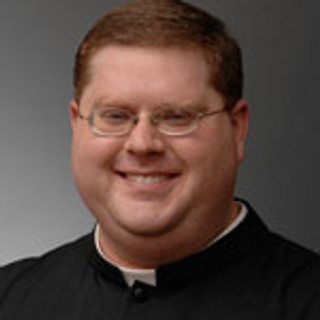
Fr. Scott Haynes

“Dearly beloved, Whatsoever is born of God overcometh the world:
and this is the victory, which overcometh the world, our faith” (1 John 5:4).
Saint John gives us here a sentence that seems at first almost too large for our daily struggles. We hear the words overcometh the world, and perhaps we think of great martyrs, heroic confessors, or souls lifted high above ordinary weakness. Yet the Apostle is writing to Christians who must live in the dust and strain of ordinary life. He knows the world can dazzle, bruise, threaten, seduce, flatter, and weary the soul. He knows that the battle is not imaginary. And still he says, with a calm that has the ring of heaven in it, that the one born of God overcomes. He does not say merely resists. He does not say survives. He says overcomes.¹
To understand the passage, we must first understand what Saint John means by “the world.” He is not condemning the beauty of creation, nor the goodness of family life, work, friendship, or earthly duty. Rather, he means the world insofar as it has rebelled against God and organized itself around passing things. It is the world as a false atmosphere. It is the world when pride is called strength, impurity is called freedom, greed is called prudence, compromise is called balance, and unbelief is called wisdom. It is that whole current of thought and desire that tries to teach the soul to live for what is visible, immediate, and fading. The world in this sense is always trying to shrink the horizon. It wants us to think only of today’s pleasure, today’s fear, today’s reputation, today’s wound. Faith breaks that spell.²
And Saint John does something very beautiful. He does not begin with human strength. He begins with divine birth: “Whatsoever is born of God.” The victory begins not in our natural toughness, but in grace. Christianity is not merely a set of admirable principles laid upon unchanged human nature. It is a new life planted in the soul. God does not merely command from above; He renews within. Saint Augustine speaks of this divine work when he says that God “forms and creates us anew” in Christ.³ That is why the Christian can do what once seemed impossible. A soul reborn by grace is not left to face the world with bare human resources. It carries within it the seed of another kingdom.
This is why the Apostle says that faith is the victory. Faith is not a pious mood. It is not optimism. It is not a pleasant religious coloring laid over ordinary life. Faith is the soul’s supernatural adhesion to Jesus Christ. It is the eye that sees beyond the surface of things. It is the hand that keeps hold of God even when the path disappears into darkness. It is the inner certainty that what God has said is more real than what the senses shout. Saint Augustine writes with luminous simplicity, “We begin in faith, and are made perfect by sight.”⁴ For now, we walk by faith. We do not yet see the crown, but faith tells us it is there. We do not yet see the final vindication of holiness, but faith already possesses it in promise.
Saint Thomas Aquinas explains the matter with great force: “The world tempts us either by attaching us to it in prosperity, or by filling us with fear of adversity. But faith overcomes this in that we believe in a life to come better than this one, and hence we despise the riches of this world and we are not terrified in the face of adversity.”⁵ Here the battle is laid bare. The world has two great methods. First, it tries to charm the soul. It says: keep Christ, if you wish, but do not take Him too seriously. Keep religion, but remain comfortable. Keep prayer, but avoid recollection. Keep morality, but do not let it cost you anything. Then, if seduction fails, the world changes its tone. It begins to threaten. It brings loss, embarrassment, ridicule, loneliness, suffering, or fear. Yet faith answers both voices. To prosperity it says: this passes. To adversity it says: this too passes. To both it says: Christ remains.
That is why the saints are not merely admirable figures from another age. They are visible commentaries on this verse. In them we see what it means for faith to overcome the world.
Consider Saint Agnes. Rome was immense, powerful, glittering, and pitiless. It had soldiers, magistrates, wealth, statues, temples, and the machinery of death. Agnes was a girl, scarcely more than a child. Saint Ambrose says she was “but twelve years old,” yet “was superior to terrors, promises, tortures, and death itself.”⁶ Those four words deserve to be lingered over. Terrors, promises, tortures, and death itself. That is the whole arsenal of the world. First it frightens. Then it entices. Then it inflicts pain. Then it kills. But Ambrose says Agnes was superior to them all. Why? Not because she was physically strong. Not because suffering was pleasant to her. Not because youth made her less aware of danger. She overcame because faith had made Christ more desirable to her than safety, more beautiful to her than earthly honor, and more real to her than the empire that threatened her. Rome could touch her body. It could not master her heart. She stood like a small white flame in a vast darkness, and the darkness could not swallow her.
Now make that scene concrete. Imagine the stone streets, the public pressure, the stern faces of officials, the humiliating spectacle prepared for a Christian girl who would not bend. Imagine how easy it would have been to save herself outwardly with one act of compromise. One gesture toward a false god. One word of surrender. One moment of weakness. That was all. But Agnes had already seen something greater. Faith had enlarged heaven before her eyes. What is Rome beside Christ? What is a little longer life beside eternal union with the Bridegroom? The world measures by force. Faith measures by truth. And so a child conquered an empire.
Saint Perpetua shows another side of the same victory. In her case, the world did not come only with official threats. It came through love, tears, and the breaking of family bonds. Her father begged her to yield. His sorrow was real. His anguish was human and piercing. This is what makes her witness so moving. She was not resisting coldly. She was resisting with a heart that felt the cost. Yet when her father pleaded with her, she pointed to a vessel and asked, “Can it be called by any other name than what it is?” When he answered no, she replied, “Neither can I call myself anything else than what I am, a Christian.”⁷ That is one of the clearest moments in all martyr literature. Perpetua did not say merely that she preferred Christianity. She spoke as one who had received a new identity. Faith had become more than opinion. It had become being.
Picture the room. A distressed father. A young woman, recently a mother. Pressure from family, pressure from law, pressure from the nearness of death. The world was trying to conquer her through the deepest natural affections. It was saying, in effect, Be reasonable. Think of your father. Think of your child. Think of your life. Yet faith does not destroy love; it purifies and orders it. Perpetua loved them, but she loved God first. She knew that to deny Christ in order to preserve earthly ties would not be love at all. It would be spiritual disaster. So she remained tender, but immovable. That is faith overcoming the world in one of its most painful forms.
Then there is Saint Ignatius of Antioch, marching toward martyrdom with chains on his hands and heaven in his heart. He writes, “All the pleasures of the world, and all the kingdoms of this earth, shall profit me nothing. It is better for me to die on behalf of Jesus Christ, than to reign over all the ends of the earth.”⁸ What freedom there is in those words. The world is stripped to its real dimensions. Pleasures. Kingdoms. Rule. Power. What are they, when set beside Christ crucified and risen? Ignatius is not using exaggeration for effect. Faith has changed the scale by which he measures everything. He has looked long enough at eternity that empire now seems small. The world always tries to make itself look immense. Faith restores proportion.
This is not only for martyrs in the arena. The same struggle takes place in quieter rooms. A young man is mocked for chastity. A young woman is encouraged to lower her standards in order to be accepted. A businessman is urged to bend the truth for gain. A mother continues in hidden sacrifice with no praise. A priest prays through dryness and discouragement. An elderly sufferer carries pain without bitterness. A Christian in grief refuses despair. In each case the world says something like this: choose comfort, preserve yourself, do not carry the cross too far, do not trust God beyond what seems safe. Faith answers with another language. It says: holiness is not wasted. Sacrifice is not sterile. Purity is not loss. Hidden fidelity is not forgotten. Christ sees. Christ knows. Christ is worth it.
Saint John Chrysostom, speaking of hope toward God, calls it “the safe anchor, the foundation of our life, the guide of the way which leads to heaven, the salvation of perishing souls.”⁹ That image belongs beautifully beside this verse. Faith is not a decorative virtue. It is an anchor. It keeps the soul from drifting into the currents of fear, vanity, appetite, and despair. When the waters rise, the anchor matters. When temptation batters the heart, the anchor matters. When death approaches, the anchor matters. The world overcomes souls chiefly when it persuades them to let go of this anchor and drift along with appearances.
And we must say something else. The victory of faith does not always look like victory to the world. In fact, it often looks like defeat. Agnes died. Perpetua died. Ignatius died. Christ Himself was crucified. Yet this is precisely the mystery. The Christian overcomes the world in the manner of Christ, not by earthly domination, but by fidelity unto the end. The Cross looked like defeat on Good Friday. Faith knew that it was triumph. So too with the saints. So too with us. A person who loses position rather than sin may look defeated. A sufferer who endures in hope may look defeated. A Christian who renounces some pleasure for the sake of purity may look defeated. But faith knows better. The world counts differently than heaven.
So this verse is both consolation and examination. It consoles, because it tells us that grace is stronger than the atmosphere around us. We are not doomed to be shaped by the age. We are born of God. But it also examines us. What still conquers me? Praise? Fear? Comfort? Human respect? Resentment? Lust? Distraction? Despair? Wherever the world still reigns in us, faith must be deepened. Not merely spoken. Deepened. Strengthened by prayer, nourished by Scripture, purified by obedience, fed by the sacraments, and tested by perseverance.
Let us ask for that victorious faith. Lord Jesus Christ, Thou hast overcome the world. Plant in us that living faith by which the martyrs stood, the virgins remained pure, the confessors endured, and hidden saints carried the cross in silence. When prosperity flatters us, make us sober. When adversity frightens us, make us steadfast. When the world sparkles before our eyes, let us see how quickly its brightness fades. When obedience grows costly, let us remember Thy wounds. And when we are weak, remind us that the victory is not born from ourselves, but from being born of God. Then, in the great trials and in the small, in youth and age, in consolation and darkness, may we overcome the world by cleaving to Thee alone.
Notes
¹ Augustine, On the Predestination of the Saints, bk. 1, in Nicene and Post-Nicene Fathers, First Series, vol. 5, ed. Philip Schaff (Buffalo, NY: Christian Literature Publishing Co., 1887), New Advent, https://www.newadvent.org/fathers/15121.htm.
² Augustine, Handbook on Faith, Hope, and Love, chap. 8, in Nicene and Post-Nicene Fathers, First Series, vol. 3, trans. J. F. Shaw, ed. Philip Schaff (Buffalo, NY: Christian Literature Publishing Co., 1887), New Advent, https://www.newadvent.org/fathers/1302.htm.
³ Augustine, On Grace and Free Will, chap. 28, in Nicene and Post-Nicene Fathers, First Series, vol. 5, trans. Peter Holmes and Robert Ernest Wallis, ed. Philip Schaff (Buffalo, NY: Christian Literature Publishing Co., 1887), New Advent, https://www.newadvent.org/fathers/1510.htm.
⁴ Augustine, Handbook on Faith, Hope, and Love, chap. 8, in Nicene and Post-Nicene Fathers, First Series, vol. 3, trans. J. F. Shaw, ed. Philip Schaff (Buffalo, NY: Christian Literature Publishing Co., 1887), New Advent, https://www.newadvent.org/fathers/1302.htm.
⁵ Thomas Aquinas, The Apostles’ Creed, art. 1, trans. Joseph B. Collins (New York: Joseph F. Wagner, 1939), Isidore.co, https://isidore.co/aquinas/english/Creed.htm.
⁶ Ambrose, Concerning Virginity, bk. 1, chap. 2, in Nicene and Post-Nicene Fathers, Second Series, vol. 10, trans. H. de Romestin, E. de Romestin, and H. T. F. Duckworth, ed. Philip Schaff and Henry Wace (Buffalo, NY: Christian Literature Publishing Co., 1896), New Advent, https://www.newadvent.org/fathers/34071.htm.
⁷ The Passion of Perpetua and Felicity, chap. 3, in Ante-Nicene Fathers, vol. 3, trans. Robert Ernest Wallis, ed. Alexander Roberts, James Donaldson, and A. Cleveland Coxe (Buffalo, NY: Christian Literature Publishing Co., 1885), New Advent, https://www.newadvent.org/fathers/0324.htm.
⁸ Ignatius of Antioch, Epistle to the Romans, chap. 6, in Ante-Nicene Fathers, vol. 1, trans. Alexander Roberts and James Donaldson, ed. Alexander Roberts, James Donaldson, and A. Cleveland Coxe (Buffalo, NY: Christian Literature Publishing Co., 1885), New Advent, https://www.newadvent.org/fathers/0107.htm.
⁹ John Chrysostom, To Theodore After His Fall, bk. 1, chap. 14, in Nicene and Post-Nicene Fathers, First Series, vol. 9, ed. Philip Schaff (Buffalo, NY: Christian Literature Publishing Co., 1889), New Advent, https://www.newadvent.org/fathers/1903.htm.
Books from Priestly Press


Comments