


The Ancient Beauty of the Rogation Days
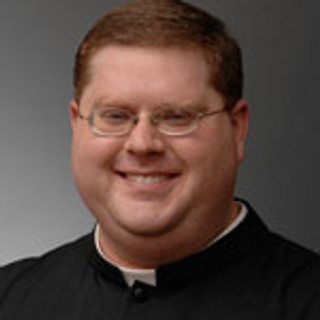
Fr. Scott Haynes

Processions, Prayer, and the Blessing of the Fields
There was once a time when entire Catholic villages processed through muddy roads beneath dark spring clouds carrying crucifixes, banners, relics, and candles while chanting the Litany of the Saints. Priests in violet vestments walked before the people. Church bells sounded across the countryside. Farmers knelt beside newly planted fields. Children scattered flower petals. The faithful prayed not merely for themselves, but for the earth itself: for rain, for harvests, for protection from storms, plague, famine, and war.
These were the Rogation Days.
Today they are little known in many places, yet for centuries they formed one of the most moving and beloved customs of the Catholic year. They united heaven and earth, altar and plow, priest and laborer, reminding Christians that all creation depends upon God and that man must sanctify not only churches and monasteries, but roads, rivers, vineyards, homes, and fields.

The Rogation Days reveal something profoundly Catholic about the world. The earth is not merely matter. Creation is charged with meaning because it comes from the hand of God. Wheat, rain, orchards, cattle, rivers, and sunlight all belong to Him. The Church therefore blesses these things and carries prayer into the very landscape of human life.
The word “rogation” comes from the Latin rogare, meaning “to ask” or “to beseech.” These days were times of supplication. The faithful begged God for mercy, protection, fruitful harvests, and deliverance from calamities. Yet they were also days of penance and conversion because the Church understood that man’s sin wounds not only his soul but the harmony of creation itself.
Saint Paul writes:
“For we know that every creature groaneth and travaileth in pain, even till now.” (Romans 8:22)
The Rogation Days were the Church’s answer to that groaning creation.
The Origins of the Rogation Days
The tradition reaches back into the early centuries of Christianity. The Greater Rogation occurs on April 25, the feast of Saint Mark the Evangelist. It is extremely ancient and appears to have been established in Rome long before the time of Pope Saint Gregory the Great.
The Lesser Rogation Days developed later in Gaul during the fifth century. According to tradition, terrible earthquakes, fires, and disasters afflicted the region around Vienne in France. The people were terrified. Wild beasts reportedly wandered through the streets. Crops failed. Fear spread everywhere.
In this moment of suffering, Saint Mamertus called the faithful to prayer, fasting, repentance, and solemn processions. The people walked barefoot through the countryside chanting psalms and litanies, imploring God’s mercy. The disasters ceased, and the custom spread rapidly throughout Christendom.
Eventually the Church adopted these observances universally.
The Lesser Rogation Days came to be observed on the Monday, Tuesday, and Wednesday before Ascension Thursday. Their placement is spiritually striking. As Christ prepares to ascend into heaven, the Church processes through the earth asking that divine grace descend upon the world He leaves behind.
A Procession Through Creation
The Rogation procession was never merely symbolic. It was deeply incarnational.
The priest walked physically through the boundaries of the parish blessing the land. Crosses were carried before the people because Christ redeems not only souls but the entire cosmos. Holy water was sprinkled upon fields and roads. The Litany of the Saints was sung repeatedly as the Church invoked heaven’s aid.
The old rural Catholic world understood something modern society often forgets: man is dependent. Crops can fail. Storms can destroy months of labor in a single hour. Disease can wipe out cattle. Drought can empty granaries. Human civilization rests upon gifts it cannot ultimately create for itself.
The Rogation Days cultivated humility.

The farmer who marched in procession beside his fields recognized that the harvest depended more upon God than upon his own strength. Even kings once participated in Rogation processions because rulers too depended upon divine providence.
There is also profound theological beauty in these ceremonies. Christianity is not a religion that rejects the material world. The Church blesses candles, bells, bread, wine, palms, ashes, homes, water, fields, herbs, animals, and graves because matter itself can become a vehicle of grace. The Rogation Days express this sacramental vision magnificently.
Penance Before Petition
The Rogation Days were traditionally marked by fasting and abstinence. This is important because the Church understood that petition without repentance becomes shallow. The faithful first humbled themselves before God.
In older Catholic cultures, these processions could last for hours. The people walked long distances chanting penitential prayers. Violet vestments were worn, indicating mourning for sin and dependence upon divine mercy.
The Litany of the Saints formed the heart of the procession:
“From lightning and tempest, deliver us, O Lord.From plague, famine, and war, deliver us, O Lord.”
These prayers arose from a civilization that knew its fragility. Yet there was also tremendous hope in them because Christians believed that God governs history lovingly and attentively.
Saint Gregory the Great once wrote:
“The earth would not bring forth its fruits unless it received the blessing of God.”
That conviction shaped Catholic civilization for centuries.
The Beating of the Bounds
In some regions, Rogation processions developed into what became known as the “beating of the bounds.” Parish boundaries were physically walked and marked. Children were sometimes tapped lightly at boundary stones so they would remember the limits of the parish for the future.
Though this may sound quaint to modern ears, it reflected a deeply Christian understanding of place. The parish was not merely an administrative territory. It was a spiritual family bound together under the Cross.
Every road, stream, bridge, and meadow belonged within the care of Christ the King.
Rogation Days and the Litany of the Saints
No prayer is more associated with the Rogation Days than the Litany of the Saints. This ancient chant evokes the feeling of the pilgrim Church journeying through the world under the protection of heaven.
One hears in it the entire communion of saints moving alongside the faithful:
“Saint Michael, pray for us.Saint Joseph, pray for us.Saint Benedict, pray for us.”
The procession becomes an image of the Church herself journeying toward eternity.
The Litany also reveals something beautiful about Catholic spirituality: Christians do not pray alone. Heaven participates in the struggles of earth. The saints are not distant historical figures but living members of Christ’s Mystical Body.
The Rogation Days and Modern Man
The modern world often lives as though technology has conquered dependence upon God. Yet droughts still come. Storms still devastate cities. Illness still humbles nations. Economic systems collapse. Anxiety spreads despite material abundance.
The Rogation Days speak prophetically to this age.
They remind man that creation is not his possession but a gift entrusted to him. They teach gratitude for ordinary things: rain, sunlight, soil, seed, and bread. They call Christians to recover a sense of wonder toward creation rather than treating the world merely as material for consumption.
There is also a hidden remedy here for spiritual restlessness. Modern life is often detached from nature, detached from seasons, detached from sacred rhythms. The Rogation Days reconnected prayer with the land itself. They sanctified springtime. They taught people to see divine providence operating in daily life.
In a world increasingly artificial and hurried, the sight of a parish processing slowly through fields while chanting ancient litanies possesses extraordinary power.
The Rogation Spirit Today
Although the Rogation Days are less commonly observed now, many traditional Catholic communities have preserved or revived them. Some parishes still hold outdoor processions before Ascension. Priests bless gardens and farmland. The Litany of the Saints is chanted once more beneath open skies.
Even where formal processions are absent, Catholics can recover the spirit of the Rogation Days through prayer, fasting, and gratitude for creation.
Families may pray the Litany of the Saints together. Farmers and gardeners can ask God’s blessing upon their labor. Catholics may rediscover older prayers for protection against storms and disasters. Above all, the faithful can cultivate the humility that recognizes every good thing as coming from God.
This spirit is desperately needed today.
A Civilization That Asked God for Blessing
The Rogation Days emerged from a Christian civilization that believed God was intimately involved in daily life. The people did not merely pray in moments of catastrophe. They prayed before planting. They prayed before harvest. They prayed when storms threatened. They prayed while walking roads their ancestors had walked for centuries.
Their processions proclaimed publicly that Christ reigns over all creation.
There is something deeply moving in imagining these generations of Catholics processing through fields while chanting:
“That Thou wouldst vouchsafe to give and preserve the fruits of the earth, we beseech Thee, hear us.”
The Rogation Days remind us that Christianity is not an abstraction. It walks roads. It blesses rivers. It sanctifies labor. It kneels in muddy fields beneath threatening skies and still dares to hope in God.
And perhaps modern Catholics need that reminder more than ever.
Bibliography
Guéranger, Prosper. The Liturgical Year. Translated by Laurence Shepherd. Dublin: James Duffy, 1870–1884.
Jacobus de Voragine. The Golden Legend. Translated by William Granger Ryan. Princeton, NJ: Princeton University Press, 1993.
Parsch, Pius. The Church’s Year of Grace. Translated by William G. Heidt. Collegeville, MN: Liturgical Press, 1953–1964.
King, Archdale A. The Liturgy of the Roman Church. London: Longmans, Green and Co., 1957.
Fortescue, Adrian, and J. B. O’Connell. The Ceremonies of the Roman Rite Described. London: Burns & Oates, 1943.
Newland, Mary Reed. The Year of the Lord in the Christian Home. Manchester, NH: Sophia Institute Press, 2004.
Catholic Rural Life Conference. Manual of Catholic Rural Life. Des Moines, IA: Catholic Rural Life Press, 1940.
Guardini, Romano. The Spirit of the Liturgy. Translated by Ada Lane. New York: Crossroad, 1998.
Saint Augustine of Hippo Augustine. The City of God. Translated by Marcus Dods. New York: Modern Library, 1950.
Saint Gregory the Great Gregory the Great. Forty Gospel Homilies. Translated by David Hurst. Kalamazoo, MI: Cistercian Publications, 1990.
Saint Thomas Aquinas Aquinas, Thomas. Summa Theologiae. Translated by Fathers of the English Dominican Province. New York: Benziger Brothers, 1947.
The Roman Martyrology. Baltimore: John Murphy Company, 1916.
Wilson, H. A., ed. The Gregorian Sacramentary under Charles the Great. London: Henry Bradshaw Society, 1915.
The Roman Ritual. Translated by Philip T. Weller. Milwaukee: Bruce Publishing Company, 1964.


Comments