


Heirs of Heaven
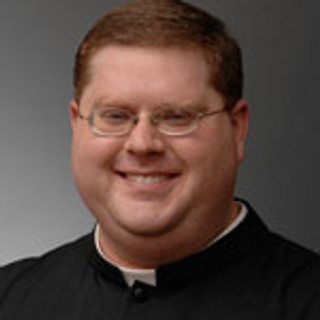
Fr. Scott Haynes
A Meditation on Romans 8:12-17 and Luke 16:1–9
Brethren: We are debtors, not to the flesh, that we should live according to the flesh, for if you live according to the flesh you will die; but if by the spirit you put to death the deeds of the flesh, you will live. For whoever are led by the Spirit of God, they are the sons of God. Now you have not received a spirit of bondage so as to be again in fear, but you have received a spirit of adoption as sons, by virtue of which we cry, Abba! Father! The Spirit Himself gives testimony to our spirit that we are sons of God. But if we are sons, we are heirs also: heirs indeed of God and joint heirs with Christ. (Romans 8:12-17)
At that time, Jesus spoke to His disciples this parable: There was a certain rich man who had a steward, who was reported to him as squandering his possessions. And he called him and said to him, ‘What is this that I hear of you? Make an accounting of your stewardship, for you can be steward no longer.’ And the steward said within himself, ‘What shall I do, seeing that my master is taking away the stewardship from me? To dig I am not able; to beg I am ashamed. I know what I shall do, that when I am removed from my stewardship they may receive me into their houses.’ And he summoned each of his master’s debtors and said to the first, ‘How much do you owe my master?’ And he said, ‘A hundred jars of oil.’ He said to him, ‘Take your bond and sit down at once and write fifty.’ Then he said to another, ‘How much do you owe?’ He said, ‘A hundred kors of wheat.’ He said to him, ‘Take your bond and write eighty.’ And the master commended the unjust steward, in that he had acted prudently; for the children of this world, in relation to their own generation, are more prudent than the children of the light. And I say to you, make friends for yourselves with the mammon of wickedness, so that when you fail they may receive you into the everlasting dwellings. (Luke 16:1-9)

The Church places beside these words of Saint Paul (Romans 8:12-17) the Gospel of the unjust steward (Luke 16:1–9). At first the two readings seem unrelated. One proclaims the astonishing dignity of becoming children of God, while the other recounts the story of a dishonest manager who wisely prepares for his future. Yet together they teach a single lesson: those who are heirs of heaven must live wisely on earth.
Saint Paul tells us that we have not received "a spirit of bondage so as to be again in fear." Before Christ redeemed us, mankind was enslaved by sin and separated from God. Through Baptism, however, we have been adopted into the Father's household. The Holy Ghost moves our hearts to cry, "Abba, Father!" We approach God not merely as our Creator or Judge but as our loving Father.
Saint Irenaeus contemplated this mystery with wonder:
"Our Lord Jesus Christ... became what we are, that He might bring us to be even what He is Himself."¹
The eternal Son took our human nature so that we might become, by grace, children of God and heirs of His kingdom.
This inheritance is beyond all earthly wealth. We are heirs not to a fading fortune but to eternal life, the vision of God, and the joy of the saints. Yet an inheritance also carries responsibility. Children of the King must learn to live as members of the royal household.
This is precisely the lesson taught by the Gospel. The steward suddenly realizes that his time is short. Though he had squandered his master's goods, he wisely uses the remaining opportunities entrusted to him to prepare for what lies ahead. Our Lord does not praise his dishonesty. He praises his foresight. The steward understood that the present must be used to prepare for the future.
Imagine a young prince who is told that one day he will inherit his father's kingdom. Until that day arrives, he is entrusted with only a small estate to govern. If he wastes it through selfishness and neglect, he proves himself unworthy of greater responsibilities. But if he manages it with wisdom, generosity, and justice, he demonstrates that he is ready for the kingdom that awaits him.
So it is with us. God has entrusted each of us with time, talents, possessions, opportunities, and countless graces. None of these belongs to us absolutely. We are stewards, not owners. One day the Master will ask each of us to give an account of our stewardship.
Saint John Chrysostom reminds us of the incomparable worth of the human soul:
"Nothing is equal to the soul. The whole world is not equal to one soul."²
If even one soul is worth more than the world, then every act of charity, every sacrifice offered for Christ, and every kindness shown to another has eternal value.
Saint Gregory the Great teaches,
"When we give to the poor the things indispensable to them, we are restoring what is theirs. We are paying a debt of justice rather than performing a work of mercy."³
The goods entrusted to us become heavenly treasure when they are placed at the service of Christ in our neighbor.
Saint Augustine beautifully prays to God,
"Thou so carest for every one of us as if Thou caredst for him only, and so for all as if they were but one."⁴
The Father's love is personal. He knows every burden we carry and every hidden act of fidelity. Because we are His beloved children, nothing offered to Him in love is ever forgotten.
Near the end of her life, Saint Thérèse of Lisieux summed up her spirituality in these words:
"It is confidence and nothing but confidence that must lead us to Love."⁵
She understood that children do not earn their father's love; they respond to it with trust. The same confidence should characterize every Christian soul.
Finally, Saint Leo the Great exhorts us:
"Christian, remember your dignity."⁶
If we remembered every day that we are adopted children of God and heirs with Christ, how differently we would use our time, our possessions, and our lives. We would seek not passing riches but eternal ones. We would become prudent stewards, preparing not merely for tomorrow but for eternity.
The unjust steward acted because he knew his time was limited. We too have only this earthly life to prepare for the everlasting kingdom. Every day offers another opportunity to invest in what lasts forever. Let us therefore live as faithful children of our heavenly Father, using every grace He has entrusted to us for His glory and the salvation of souls. Then, when our stewardship is complete, we shall hear the Father's welcome and receive the inheritance promised to all who remain faithful.
Prayer
Heavenly Father, through Your Son You have adopted me into Your family and made me an heir of heaven. Teach me to live as Your faithful child. May I use wisely every grace, every possession, and every opportunity You have entrusted to me. Grant that, when my earthly stewardship has ended, I may be welcomed into the everlasting home prepared for those who love You. Through Christ our Lord. Amen.
Notes
Saint Irenaeus, Against Heresies, Book V, Preface. In The Ante-Nicene Fathers. Vol. 1. Edited by Alexander Roberts and James Donaldson. Peabody, MA: Hendrickson Publishers, 1994.
Saint John Chrysostom, Homily 2 on Eutropius. On Wealth and Poverty. Translated by Catherine P. Roth. Crestwood, NY: St. Vladimir's Seminary Press, 1984.
Saint Gregory the Great, Pastoral Rule, Part III, Chapter 21. Translated by George E. Demacopoulos. Crestwood, NY: St. Vladimir's Seminary Press, 2007.
Saint Augustine, Confessions, Book III, Chapter 11. Translated by Henry Chadwick. Oxford: Oxford University Press, 1991.
Saint Thérèse of Lisieux, Last Conversations, Yellow Notebook, 17 July 1897. The Collected Works of St. Thérèse of Lisieux. Vol. 3: Last Conversations. Washington, DC: ICS Publications, 1996.
Saint Leo the Great, Sermon 1 on the Nativity of the Lord. Translated by Jane Patricia Freeland and Agnes Josephine Conway. Washington, DC: The Catholic University of America Press, 1996.
Priestly Press


Comments