


All Creation Groans
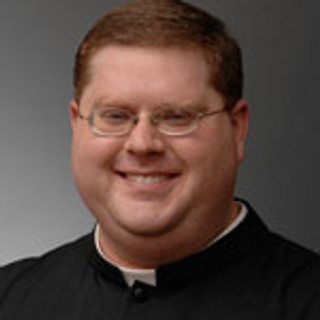
Fr. Scott Haynes

A Meditation on Romans 8:18–23
St. Paul gives us one of the most majestic visions in all of Sacred Scripture when he writes,
“For we know that every creature groaneth and travaileth in pain, even till now. And not only it, but ourselves also, who have the firstfruits of the Spirit: even we ourselves groan within ourselves, waiting for the adoption of the sons of God, the redemption of our body” (Romans 8:22–23).
These words are not gloomy words. They are not the complaint of a discouraged man, nor the cry of someone who sees only suffering and decay. They are the words of an Apostle who looks honestly at the pain of the world and yet sees hidden inside that pain the promise of glory. St. Paul hears creation groaning, but he does not mistake the groaning for despair. He compares it to travail, to the agony of childbirth. That distinction changes everything. The world is not merely dying. In Christ, it is being brought toward birth.
Anyone who has lived long enough to suffer knows that the world groans. The body groans through sickness, fatigue, age, and death. Families groan under misunderstanding, separation, anxiety, and grief. Nations groan under war, injustice, corruption, and fear. Even the earth itself seems to groan through storms, droughts, disasters, and decay. There is something wounded in creation, something beautiful yet unfinished, something magnificent yet burdened.
St. Paul does not deny this. Christianity is not a religion that asks us to pretend the world is painless. It does not command us to smile falsely before sorrow. Rather, it gives us the courage to name sorrow without being conquered by it. The Christian can look at a hospital bed, a grave, a broken home, a lonely heart, and say, “Yes, creation groans.” But the Christian can also say, “This groaning is not the final word.”
The mystery begins in Genesis. God created the world good. The heavens, the earth, the sea, the animals, the plants, and finally man and woman were fashioned by divine wisdom and love. Creation was not an accident, nor a prison, nor a mistake. It was a gift. Yet through sin, disorder entered the world. Man, who had been made to live in harmony with God, with himself, with his neighbor, and with creation, became divided. Sin did not destroy the goodness of creation, but it wounded the relationship between creation and its Creator. The world remained beautiful, but beauty now had sorrow mingled with it.
This is why we often experience life as a strange mixture of joy and ache. A sunset can move the heart almost to tears. A child’s laughter can seem like music from paradise. A field of wheat, a mountain, a lake, or a quiet night sky can awaken in us a longing we can hardly explain. Yet the same world contains graves, violence, illness, and loss. We sense that creation is good, but we also sense that it is waiting for something more. The world is like a cathedral under restoration: noble, sacred, wounded, and not yet complete.
St. Paul tells us that creation waits “for the revelation of the sons of God” (Romans 8:19). This means that the destiny of the material world is mysteriously tied to the destiny of man. When man fell, creation was subjected to vanity. When man is glorified in Christ, creation itself will share in a kind of liberation. The world is not destined simply to be discarded like a ruined garment. God’s plan is not escape from creation, but redemption. The same God who made heaven and earth will renew them.
This is deeply important for Catholic faith. We do not believe that salvation means becoming ghosts or floating spirits. We believe in “the resurrection of the body.” The body matters. Matter matters. Creation matters. The Son of God did not merely appear to be man; He truly became flesh. He had hands that touched the sick, eyes that wept over Jerusalem, feet that walked the roads of Galilee, a heart that was pierced on Calvary. After His Resurrection, He did not abandon His body. He rose bodily, gloriously, truly. The wounds remained, but they were transfigured.
That is our hope too. St. Paul says that we wait for “the redemption of our body.” Notice that he does not say we wait to be freed from the body, as if the body were an evil cage. He says we wait for the body to be redeemed. The body that suffers, labors, kneels, fasts, serves, embraces, ages, and dies is destined, in Christ, for glory. The Christian hope is not vague optimism. It is bodily resurrection.
This gives dignity to every hidden suffering. The pain of the elderly man who can no longer walk as he once did, the mother exhausted by caring for her children, the laborer whose hands are worn, the sick person whose body feels like a burden, the grieving person whose chest aches with sorrow, all of these groans can be united to Christ. The body is not meaningless. Its suffering can become prayer. Its weakness can become sacrifice. Its wounds can become, by grace, places where Christ dwells.
St. Paul also says that we have “the firstfruits of the Spirit.” In ancient Israel, the firstfruits were the first portion of the harvest offered to God. They were small compared to the full harvest, but they were a sign that the harvest had begun. So it is with the Holy Ghost in the soul. Grace is already real. Divine life has already been planted in us. Through Baptism we are made children of God. Through Confirmation we are strengthened. Through the Holy Eucharist we receive Christ Himself. Through Confession we are restored when we fall. The future glory has already begun secretly in the soul.
And yet, we still groan.
This is one of the great truths of Christian life. Grace does not remove all struggle at once. A baptized man still battles temptation. A faithful woman still suffers grief. A saint may still endure illness, dryness in prayer, misunderstanding, and persecution. The Holy Ghost dwells in us, but we are not yet in heaven. We have the firstfruits, not yet the full harvest. We have the pledge, not yet the complete possession. We are truly children of God, but the glory of that sonship has not yet been fully revealed.
This helps us understand why holiness often feels like longing. The Christian life is not simply moral improvement, though it includes that. It is not merely discipline, though discipline is necessary. It is a deep inner stretching of the soul toward God. We groan because we love. We groan because we have tasted enough of God to know that nothing less than God can satisfy us. We groan because grace has awakened in us a desire too large for this passing world.
A person without faith may groan because life is painful. A Christian groans because life is painful, but also because glory has been promised. The groaning of the Christian is filled with hope. It is the sigh of exile, not the cry of abandonment. It is the yearning of a child far from home, not the despair of an orphan.
This is why St. Paul can speak elsewhere of suffering with such astonishing confidence:
“For I reckon that the sufferings of this time are not worthy to be compared with the glory to come, that shall be revealed in us” (Romans 8:18).
He does not say suffering is nothing. He knew suffering too well to speak so cheaply. He had been beaten, imprisoned, rejected, shipwrecked, and hunted. He knew the cost of discipleship.
But he also knew that suffering, when placed beside eternal glory, is not the measure of our destiny.
The Christian must learn to see suffering in the light of birth. A woman in labor does not deny the pain. The pain is real, intense, and consuming. But it is pain ordered toward life. This is the image St. Paul gives us. Creation is in travail. The saints are in travail. The Church herself is in travail as she brings forth children for God through the sacraments, prayer, sacrifice, and witness. The Cross itself was travail. From the pierced side of Christ, the Church was born.
Therefore, our sufferings are not useless when they are joined to Him. This is not sentimental language. It is the heart of Christian redemption. Christ did not abolish suffering by avoiding it. He entered into it, filled it with obedience, and made it a path to resurrection. When we suffer in union with Christ, our pain is no longer isolated. It becomes part of a larger mystery. It can purify love, deepen compassion, detach us from false hopes, and make us more capable of heaven.
But we must be careful. We should never speak of suffering as if evil itself were good. Death is an enemy. Sin is evil. Cruelty is evil. Disease is a consequence of a wounded world. Christianity does not call evil good. Rather, it proclaims something far more wonderful: God is so powerful and so merciful that He can bring good even out of evil. The Cross was the worst injustice in history, and yet through it came the salvation of the world.
This is the secret hidden inside Romans 8. The groaning of creation is real, but it is held within the providence of God. The groaning of the faithful is real, but it is accompanied by the Holy Ghost. The groaning of the body is real, but the body is destined for redemption. Nothing given to Christ is wasted.
This passage also teaches us how to look at the world around us. If creation groans, then the Christian should not be indifferent to creation’s suffering. We should care about the poor, the sick, the lonely, the unborn, the elderly, the imprisoned, the abandoned, and the wounded. We should care about the visible world God made, not because the earth is God, but because the earth belongs to God. Creation is not our idol, but neither is it our toy. It is a gift entrusted to human stewardship, and it will one day be renewed in ways we cannot fully imagine.
At the same time, Romans 8 protects us from putting our final hope in earthly progress. Human efforts matter, and Christians should work for justice, mercy, beauty, and peace. But no political program, no technology, no economic system, and no earthly comfort can bring about the redemption of the body. The deepest wound in creation requires more than human repair. It requires Christ. Only the risen Lord can open the grave. Only He can transform death into life.
This gives the Christian a remarkable balance. We do not despise this world, because God made it and Christ entered it. But we do not cling to this world as if it were our final home. We work, love, build, plant, teach, heal, and serve, but we do so as pilgrims. We rejoice in earthly goods, but we do not ask them to be heaven. We endure earthly sorrows, but we do not allow them to convince us that heaven is a dream.
In the Holy Eucharist, this mystery becomes especially near. There, under the appearances of bread and wine, the risen Christ gives us His Body and Blood. The Eucharist is not merely a reminder of future glory. It is the pledge of future glory. The same Lord who will raise our bodies at the last day comes to strengthen our bodies and souls now. He enters our groaning world quietly, humbly, sacramentally. He comes to the sick, the weary, the tempted, and the sorrowful. He feeds pilgrims with the food of immortality.
Every Holy Communion is a whisper of Romans 8. We come to the altar still groaning, still wounded, still waiting. Yet we receive Him who has already conquered death. We carry within ourselves the firstfruits of the Spirit, and in the Eucharist we receive the Lord of the harvest. We are not yet fully revealed as sons of God, but the Son of God gives Himself to us, forming us for the glory that is to come.
This should change the way we pray. Many people think prayer should always feel peaceful, clear, and joyful. Sometimes it does. But often prayer is simply groaning before God. It is the heart saying,
“Lord, I believe, but I am tired. Lord, I hope, but I am wounded. Lord, I love Thee, but I am weak.”
Such prayer is not failure. It may be very deep prayer. The Holy Ghost teaches the soul to long for what it cannot yet see. A sigh lifted to God in faith may contain more love than many polished words.
This should also change the way we face death. Death remains solemn. It tears at the heart because man was made for life. But in Christ, death is no longer a locked door. The body placed in the grave is like a seed planted in hope. The cemetery is not merely a field of endings. For those who die in Christ, it is a field awaiting the resurrection. The redemption of the body means that God will not forget what He has made. He will not abandon the bodies of His saints. He will raise them.
Imagine that day. Every wound healed. Every tear wiped away. Every faithful sacrifice revealed. Every hidden act of love shining with meaning. The bodies that bent in prayer, worked in charity, suffered in patience, and were laid in the earth will rise in glory. Creation itself, so long burdened by decay, will be set free. The groaning will cease, not because creation was silenced, but because it has finally given birth.
Until then, we wait. But Christian waiting is not passive. We wait as farmers wait for harvest, as mothers wait for birth, as exiles wait for home, as the Church waits for the coming of her Bridegroom. We wait by praying, repenting, serving, forgiving, worshiping, and carrying our crosses with Christ. We wait with lamps lit.
Romans 8 teaches us that the ache we feel is not meaningless. The longing in the heart, the sorrow over death, the weariness before sin, the desire for holiness, the hunger for beauty, the yearning for a world made right, all of this points toward the redemption God has promised. Creation groans. We groan. But the Holy Ghost has already been given. Christ has already risen. The harvest has already begun.
So, when you feel the burden of life, do not think God has forgotten you. When your body is weak, remember that it is destined for redemption. When your soul sighs in prayer, remember that the Spirit dwells within you. When the world seems wounded beyond repair, remember that creation itself waits for the revelation of the sons of God.
The groaning is real, but so is the glory. The pain is real, but so is the promise. The Cross is real, but so is the empty tomb. And in Christ Jesus our Lord, the whole creation, and we with it, are moving toward the day when every travail will end in birth, every faithful tear will be gathered by God, and the children of God will stand redeemed, body and soul, in the radiant freedom of everlasting life.
Priestly Press





Comments