


The Silent Courtroom of the Heart
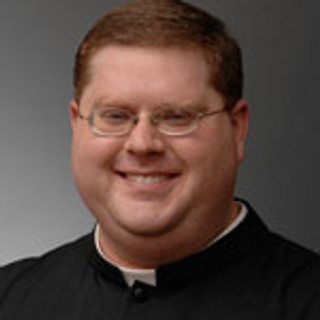
Fr. Scott Haynes

Matthew 9:1–8 tells of Jesus healing the paralytic brought to Him on a mat. But beneath the visible miracle—the man rising and walking—another drama unfolds in silence: the scrutiny of the scribes’ hearts.
“And behold some of the scribes said within themselves, He blasphemeth. And Jesus seeing their thoughts, said: Why do you think evil in your hearts?” (Matt. 9:3–4)
In this moment, the scribes do not speak aloud. They accuse Jesus interiorly, forming judgments in the secrecy of their minds. St. John Chrysostom observes that their silence reveals not humility, but hypocrisy: “They dared not accuse Him openly, yet within they condemned Him; therefore He shows that He knows the secrets of hearts.”¹
Their hearts become a kind of courtroom—where God Himself is the defendant, and the human mind presumes to pass judgment. The scribes, experts in the Law, believe themselves guardians of divine truth. Yet when Truth Himself stands before them, they see blasphemy.
This is the tragedy of the hardened heart. As St. Augustine comments, “The Lord was walking among men, but the proud eyes of the scribes were blind. They saw a man, but did not perceive God.”²
Jesus, the Reader of Hearts
Christ’s response is immediate and unsettling: “Why do you think evil in your hearts?” He exposes what is hidden. The omniscient gaze of God pierces the veil of secrecy.
The Psalmist had sung, “The Lord searcheth all hearts, and understandeth every thought” (1 Chron. 28:9). Here, the Word made flesh demonstrates that same divine prerogative. What no human could see, Jesus unveils with ease.
St. Gregory the Great notes that Christ, in revealing their thoughts, performs a double miracle—healing both the body of the paralytic and the blindness of the scribes’ souls: “He who made the paralytic walk wished also to make the proud stand upright.”³
The scribes are paralyzed in spirit. Their intellects, sharp in Scripture, are dulled in faith. Christ’s word, “Why do you think evil?”, is not condemnation alone but invitation—a chance to be healed of envy and unbelief.
The Sin of Silent Suspicion
To scrutinize Jesus in the heart, as the scribes do, is to assume one knows better than God how God should act. It is the ancient echo of Eden: “You shall be as gods.” Such interior suspicion poisons faith, turning reverence into rivalry.
Even today, this temptation remains. We can harbor inner judgments about how Christ should work—whom He should forgive, how His Church should act, when His mercy should be shown. The scribes’ silence is not foreign to us; it lives in every heart that resists surrender.
St. Jerome cautioned: “To judge what you do not understand is the first step toward blindness.”⁴ When we question God’s goodness in secret, we repeat the scribes’ error—examining the Divine Physician instead of letting Him examine us.
Seeing the Heart of Christ
Yet how patient Christ remains. He does not thunder at His accusers. Instead, He reveals His divinity by an act of mercy: “That you may know the Son of Man hath power on earth to forgive sins… arise, take up thy bed, and go into thy house.” (Matt. 9:6)
The physical healing confirms the invisible one. The scribes’ silent accusations are met not with wrath but revelation. Christ manifests His authority through compassion, proving that mercy, not suspicion, is the sign of divine power.
Origen remarks that Jesus, by forgiving sins, “shows Himself as both Judge and Savior, discerning hearts and healing them.”⁵ The same gaze that saw the scribes’ malice also saw the paralytic’s faith. God reads both with equal clarity—but responds according to their openness.
The Lesson for the Soul
The contrast is sharp: one man lies helpless but believes; others stand upright but doubt. Yet only the believer rises. The scribes’ inner scrutiny keeps them earthbound, while faith lifts the sinner to his feet.
This passage thus calls us to a spiritual examination. Do we allow Christ to read our hearts, or do we hide behind inner judgments? Do we approach Him with trust, or analyze Him from afar?
St. Bede writes, “When the Lord reproves the evil thoughts of the proud, it is not that He learns them, but that He teaches us to fear His knowledge.”⁶ Every time we hear this Gospel, we are reminded that our hidden thoughts are never hidden from the One who loves us most.
When we stop scrutinizing Jesus and let Him scrutinize us, healing begins. The true miracle is not only that the paralytic walks, but that a sinner dares to believe—and that Christ sees faith where others see only fault.
Notes
¹ St. John Chrysostom, Homilies on the Gospel of Matthew 29.
² St. Augustine, Tractates on John 2.9.
³ St. Gregory the Great, Homilies on the Gospels 9.
⁴ St. Jerome, Commentary on Matthew 9:3.
⁵ Origen, Commentary on Matthew 13.3.
⁶ St. Bede the Venerable, Homilies on the Gospels 1.16.


Comments