


The Humble Cardinal of Rome
Fr. Scott Haynes
Feast of St. Robert Bellarmine
May 13

Saint Robert Bellarmine lived during one of the most dangerous and turbulent moments in the history of the Catholic Church. Europe was burning with religious division. Ancient monasteries were being destroyed. Priests were fleeing persecution. Universities argued endlessly over theology while kingdoms abandoned Rome one after another. In the middle of that storm, Providence raised up a saint who possessed not only a brilliant mind, but a soul deeply rooted in prayer and personal holiness.
What makes Bellarmine so memorable is that he never became merely an intellectual. Many scholars of his age won arguments but lost tenderness of heart. Bellarmine managed to unite immense learning with humility, gentleness, and practical charity. Those who met him often left speaking less about his intelligence than about the peace and sincerity that radiated from him.
He was born in 1542 in the Tuscan town of Montepulciano. His family was noble but not especially wealthy. His mother, Cinzia Cervini, was the sister of Pope Marcellus II, though the future saint never tried to build a worldly career from these family connections. From childhood he showed remarkable gifts. He memorized sermons, wrote poetry, and loved sacred learning. Yet he also struggled physically throughout much of his life. He was frequently ill, thin, and frail. The image many later had of Bellarmine as an unstoppable theological warrior hides the fact that he often carried out his work while exhausted and sick.
When he entered the Society of Jesus, some relatives opposed the decision. The Jesuits were still relatively new and controversial. To many noble families, becoming a diocesan bishop or prominent court cleric offered prestige and influence. Jesuit life promised discipline, obedience, poverty, and uncertainty. Bellarmine chose it anyway.
As a young Jesuit he was sent north into regions shaken by Protestantism. In Louvain, in present-day Belgium, he became famous almost overnight as a preacher. Churches filled so rapidly that crowds pressed against doors and windows to hear him. Witnesses said he spoke with unusual clarity. He did not thunder endlessly or bury listeners beneath complicated arguments. Instead, he explained the faith in a way ordinary people could understand.
One story from this period illustrates the force of his personality. Certain students initially came to mock the “Roman preacher.” Religious disputes had become vicious in those years, and Catholic theologians were often caricatured as corrupt or arrogant. Yet after hearing Bellarmine speak, several listeners admitted privately that they were startled by his humility and evident sincerity. He defended Catholic doctrine firmly, but he did not appear driven by bitterness. Even opponents recognized something unusual in him.
His great fame eventually brought him to Rome, where he became one of the principal intellectual defenders of Catholic teaching during the Counter-Reformation. His monumental theological work, usually called simply The Controversies, answered Protestant objections point by point. These books spread throughout Europe and became enormously influential. Generations of Catholic seminarians studied them, while Protestant scholars considered Bellarmine among the most dangerous defenders of Rome.
Yet there was another side to his life that made a deep impression on contemporaries.
Bellarmine lived personally as though he were still an obscure Jesuit novice. When he was made a cardinal, many expected him to adopt the elaborate lifestyle common among church princes of the age. Cardinals often maintained richly furnished residences, elegant banquets, and large entourages. Bellarmine resisted this atmosphere almost instinctively.
A famous story tells how he entered his new residence and was disturbed by luxurious decorations and expensive draperies. Looking around, he remarked that “the walls will not go to heaven.” He simplified the rooms and preferred plain living. Servants and visitors noticed that his table remained modest. He ate little, fasted often, and devoted long hours to prayer and study.
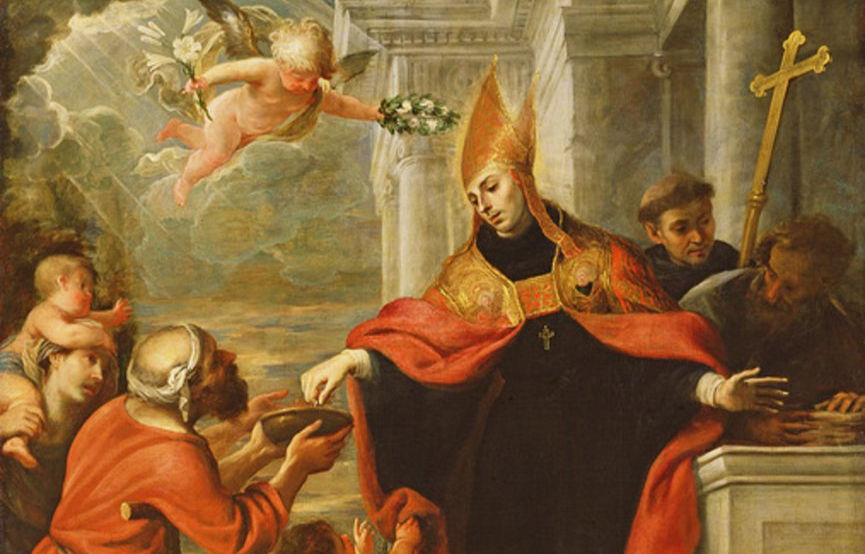
His charity toward the poor became legendary in Rome. During periods of hardship and famine, Bellarmine repeatedly emptied his household stores to feed the needy. One account tells of assistants worrying that the cardinal was giving away too much grain and food. Bellarmine answered calmly that the treasures of the Church existed for the suffering. To him, theological precision meant little if one ignored the hungry outside the door.
Another striking story concerns his family. Nepotism poisoned much of Renaissance Europe. Powerful churchmen frequently enriched relatives with church offices and favors. Bellarmine refused to behave that way. Family members who hoped his elevation would bring wealth or advancement found him deeply resistant. He believed ecclesiastical office was a sacred trust, not a means of dynastic ambition. In an age when corruption was common, this restraint impressed many people profoundly.
There are also moving stories from his dealings with the sick and dying. Bellarmine frequently visited the ill personally, especially fellow Jesuits. He did not simply send messages or delegates. Despite his immense responsibilities, he sat beside bedsides, prayed with sufferers, and encouraged the discouraged. Several witnesses noted how gently he spoke to those approaching death. He had spent so much time meditating on eternity that death itself seemed to hold little terror for him.
This interior spirit shines clearly in one of his most beloved works, The Art of Dying Well. The book does not read like the work of a cold controversialist. Instead, it reads almost like a spiritual father speaking quietly to souls preparing for judgment. Bellarmine insists repeatedly that worldly honors vanish quickly. Wealth, applause, and power fade like smoke. Only union with God remains.
Even his involvement in the famous controversy surrounding Galileo Galilei reveals something important about his character. Modern retellings often simplify the story into caricature, but Bellarmine himself approached the matter with caution and intellectual seriousness. He did not reject scientific inquiry outright. Rather, he argued that claims overturning long-established interpretations of Scripture required decisive proof. Historians today frequently observe that Bellarmine’s actual correspondence was more restrained and nuanced than later myths suggest.
After decades of exhausting labor, Bellarmine’s health deteriorated badly. He withdrew increasingly into prayer and preparation for death. In his final years he returned to simpler Jesuit life as much as possible, spending long periods in recollection. Those around him noticed that he spoke often of heaven and the mercy of Christ.
When he died in 1621, many already regarded him as a saint.
Stories of favors and miracles soon spread among the faithful. Pilgrims visited his tomb in Rome to pray for healing and intercession. Reports circulated of illnesses improving after prayers offered through him. During the long process leading toward canonization, the Church investigated claims of miraculous recoveries attributed to his intercession. These investigations formed part of the evidence eventually leading to his canonization in 1930.
There were also accounts that deeply impressed contemporaries concerning the preservation of his remains. Such reports increased devotion to him among clergy and laity alike. His relics eventually came to be venerated in the Jesuit church of Sant’Ignazio in Rome, where pilgrims still visit today.
One reason Bellarmine remains so compelling is that his holiness appeared in ordinary habits as much as dramatic achievements. He wrote catechisms because he worried about poorly instructed children. He simplified his life because he feared vanity. He gave away food because hungry people stood outside his door. He defended doctrine fiercely because he believed eternal salvation depended upon truth.
For all his immense scholarship, he never lost the soul of a pastor.
That combination explains why the Church eventually declared him a Doctor of the Church under Pope Pius XI. Bellarmine was not remembered merely because he won arguments. He is remembered because he united holiness and intelligence in a way that illuminated both.
Even now, centuries later, there is something remarkably modern about him. He lived in an age filled with confusion, ideological warfare, propaganda, political instability, and attacks upon Christianity. Yet he neither surrendered truth nor became consumed by hatred. He studied intensely, prayed deeply, cared for the poor, and kept his eyes fixed upon eternity.
That is why Catholics still remember him. Not simply because he was brilliant, but because he showed that brilliance can kneel in prayer, that learning can remain humble, and that a man surrounded by controversy can still become a saint.


Comments