


The Gift of Human Sexuality: Covenant, Conversion, and the Call to Glory
Fr. Scott Haynes
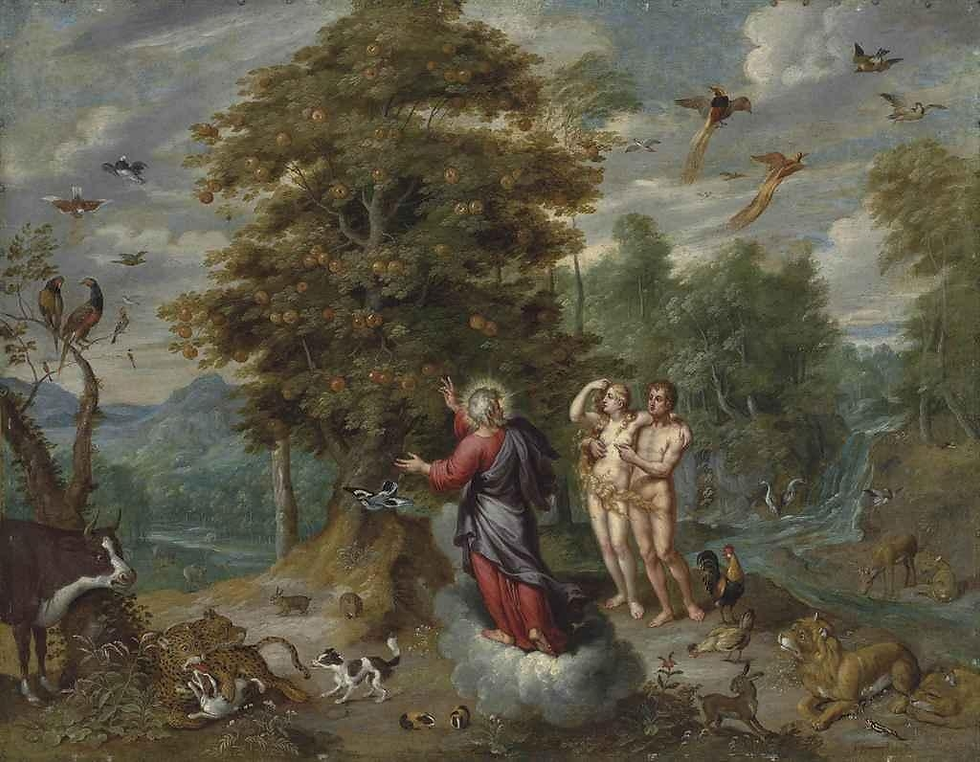
Human sexuality is not a private invention of desire nor a mere biological instinct. In the Jewish and Catholic tradition, it is a sacred gift given by God, ordered toward covenantal love, the generation of life, and the building up of the human family. From Eden to the present age, Scripture and Tradition testify that sexuality belongs within a divine order that protects the dignity of the human person and leads the soul toward eternal life.
Marriage from the Beginning
Marriage is revealed in Sacred Scripture not as a later social convention, but as part of God’s original design. Before sin entered the world, God created man and woman for one another and blessed their union:
“Wherefore a man shall leave father and mother, and shall cleave to his wife: and they shall be two in one flesh” (Gen. 2:24).
This union is covenantal. It is not merely emotional or physical, but a lifelong bond of fidelity and self-gift. God Himself crowns it with fruitfulness:
“Increase and multiply, and fill the earth” (Gen. 1:28).
Marriage thus becomes the bedrock of the family, and the family the foundation of society. When marriage is honored, society is strengthened. When it is weakened or redefined, the effects ripple outward. Trust erodes, families fragment, and love is reduced to appetite rather than sacrifice.
Covenant, Body, and Moral Law
Marriage is not a private contract but a moral reality established before God. Within this covenant, husband and wife give themselves wholly to one another, including their bodies and their fertility. Only here do they receive moral authority over one another:
“The wife hath not power of her own body, but the husband. And in like manner the husband also hath not power of his own body, but the wife” (1 Cor. 7:4).
Outside of marriage, sexual expression lacks this covenantal foundation. Even when mutual desire exists, the absence of covenant means the act contradicts moral law. The Church teaches this not to condemn, but to protect the dignity of persons and the holiness of the body.
Saint Paul reminds Christians:
“You are bought with a great price. Glorify God in your body” (1 Cor. 6:20).
Under the Old Covenant, the Jewish people were likewise bound by God’s law. Sexual conduct was never detached from obedience. Fidelity to God always included fidelity in the body.
Christ Elevates Marriage to a Sacrament
Christ does not relax this teaching. He restores and elevates it. When questioned about divorce, He returns to Genesis:
“What therefore God hath joined together, let no man put asunder” (Matt. 19:6).
Marriage, already sacred, is raised by Christ to the dignity of a Sacrament. Saint Paul unveils its deepest mystery:
“This is a great sacrament; but I speak in Christ and in the church” (Eph. 5:32).
Christ is the Bridegroom. The Church is His spotless Bride. His love is faithful, sacrificial, fruitful, and indissoluble. Christian marriage is called to mirror this mystery, sustained by grace. The Nuptial Blessing of the Mass gives voice to this theology, invoking fidelity, peace, perseverance, and fruitfulness upon the spouses.
Chastity and the Unmarried
Holiness is not reserved to the married alone. Every person is called to sanctity according to his or her state of life. For the unmarried, fidelity to God is lived through chastity:
“This is the will of God, your sanctification: that you should abstain from fornication” (1 Thess. 4:3).
Chastity is not repression, nor is it a denial of love. It is the right ordering of desire according to truth. Until marriage exists, the body is not ours to give away. Chastity prepares the heart either for marriage or for another vocation of love.
Christ Himself lived chastely. He was not incomplete. He reveals that human fulfillment does not end in sexual expression, but in communion with God:
“Blessed are the clean of heart: for they shall see God” (Matt. 5:8).
Temptation, Lust, and Disordered Attractions
The Church speaks honestly about temptation. Desire is powerful, especially after the Fall. Temptation itself is not sin. Consent is.
“Whosoever shall look on a woman to lust after her, hath already committed adultery with her in his heart” (Matt. 5:28).
Many struggle with lust, intrusive thoughts, and attractions contrary to natural law. These struggles can be heavy and humiliating. The Church calls for compassion, patience, and humility. Inclination does not equal guilt, but inclination does not define moral truth. The Fathers consistently taught that disordered desires are wounds of the Fall. They call for healing, not indulgence.
The Burden of Fairness and Lifelong Self-Denial
For some, the deepest struggle is the sense of injustice. They feel their desires are real and unchosen, and therefore believe they have a right to sexual expression. Lifelong restraint can feel impractical and unfair.
This anguish must be acknowledged. Yet the Christian faith teaches that desire never creates entitlement. Desire reveals hunger, not permission.
Saint Paul clarifies this confusion:
“All things are lawful for me, but all things are not expedient… I will not be brought under the power of any” (1 Cor. 6:12).
Christian freedom is not the liberty to indulge every appetite, but the freedom to refuse enslavement. Sexual expression finds its rightful place only within marriage between one man and one woman. Outside that covenant, indulgence does not heal the heart. It disorders it further.
The Gospel does not promise fairness as the world defines it. It promises truth and salvation:
“If any man will come after me, let him deny himself, and take up his cross daily, and follow me” (Luke 9:23).
Some crosses are heavier. This is not injustice. It is participation in the Cross of Christ. What feels like loss on earth becomes glory in heaven.
“He that ruleth his spirit is better than he that taketh cities” (Prov. 16:32).
Grace, the Sacraments, and Daily Fidelity
Chastity cannot be lived by willpower alone. Saint Augustine, who knew the slavery of lust, taught that continence itself is a gift of God. Grace is given day by day, not all at once.
Confession restores humility. The Eucharist strengthens charity. Prayer and fasting discipline desire. Saint Paul speaks with sober realism:
“I chastise my body, and bring it into subjection: lest perhaps… I myself should become a castaway” (1 Cor. 9:27).
The Long Road from Bondage to Freedom
The Church does not teach chastity as an abstract theory. She teaches it through lives. Among the most powerful witnesses are Saint Mary of Egypt and Saint Moses the Ethiopian, whose stories reveal not only conversion, but the long purification of desire through grace.
Saint Mary of Egypt pursued sexual sin deliberately for many years. Her desires ruled her imagination and her body. Her conversion was sudden, but her healing was not. After being mysteriously prevented from entering the Church of the Holy Sepulchre, she repented, turned to the Mother of God, and withdrew into the desert. There she endured years of violent interior struggle. Memories and passions returned with force. She prayed, fasted, wept, and persevered. Slowly, desire was purified. The fire that once enslaved her became love of God. Her sanctity was forged through endurance, not ease.
Saint Moses the Ethiopian lived a life of violence, robbery, drunkenness, and lust. Feared for his brutality, he encountered monks whose peace drew him to conversion. After baptism, he struggled intensely with lustful thoughts and bodily agitation. His elders taught him patience, fasting, prayer, manual labor, and obedience. Strength once used for sin was slowly redirected toward virtue. When asked to judge a fallen brother, Moses carried a leaking basket of sand, saying his own sins were spilling out behind him. This humility marked his chastity. He later became a priest and finally accepted martyrdom in peace.
Together, these saints proclaim that chastity is not reserved for the naturally restrained, but offered to the deeply wounded. Desire can be purified. Grace is stronger than habit. Fidelity matters more than immediate victory.
Procreation and the Gift of Children
Marriage is ordered not only toward unity, but toward life:
“Behold children are the inheritance of the Lord: the fruit of the womb is a reward” (Ps. 126:3).
Children are the fruit of marital love, not its product. Every child, regardless of circumstances, is a soul beloved by God and redeemed by Christ.
Yet no one may claim dominion over life itself. To separate procreation from the bodily self-gift of husband and wife is to usurp a role that belongs to God alone. Life must be received as gift, not engineered as entitlement.
Angelic Help in the Battle for Purity
The struggle for chastity is not only moral or psychological. It is spiritual:
“For our wrestling is not against flesh and blood; but against principalities and powers” (Eph. 6:12).
For this reason, the Church has always encouraged angelic intercession, especially the aid of Saint Michael the Archangel. His name, Who is like unto God?, rebukes the ancient temptation to seize autonomy apart from obedience.
The Chaplet of Saint Michael explicitly petitions for control over unruly passions. It reminds struggling souls that chastity is not solitary heroism. Heaven assists those who humbly ask.
“He hath given his angels charge over thee; to keep thee in all thy ways” (Ps. 90:11).
The Body and Our Eternal Destiny
Christian morality is ultimately eschatological. We are destined for resurrection:
“It is sown in corruption, it shall rise in incorruption” (1 Cor. 15:42).
The saints disciplined the body not because they despised it, but because they believed in its future glory. Chastity on earth is a foretaste of heaven, where love will be free from lust, domination, and disorder.
“Our conversation is in heaven” (Phil. 3:20).
A Final Word of Hope
God’s law does not oppose love. It protects it. In Eden, temptation promised fulfillment without obedience. Christ offers a better way:
“If you love me, keep my commandments” (John 14:15).
No sacrifice made for God is forgotten. No restraint embraced in faith is wasted.
Those who struggle with disordered desire are not second-class Christians. They are entrusted with a demanding sanctity that unites them closely to the Cross and prepares them for glory.
The path is narrow.
But it leads to life.


Comments