


The Daniel Fast
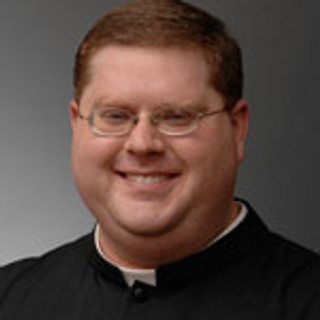
Fr. Scott Haynes

The Daniel Fast is a form of prayerful fasting inspired by the prophet Daniel, especially by two passages in the Book of Daniel. It is not merely a diet, nor is it simply a health program dressed in religious language. At its heart, the Daniel Fast is a way of saying to God:
“Lord, I want my hunger to become prayer. I want my body, my mind, and my desires to be turned toward You.”
The first inspiration comes from Daniel’s youth in Babylon. He and his companions were taken from Jerusalem into a pagan court, surrounded by luxury, ambition, strange gods, and the pressure to conform. The king appointed them food and wine from his own table, but Daniel refused to let himself be absorbed into the spirit of Babylon. Scripture says: “Daniel purposed in his heart that he would not be defiled with the king’s table, nor with the wine which he drank” (Daniel 1:8). That phrase is very important:
“Daniel purposed in his heart.”
Fasting begins there. Before it touches the plate, it touches the will. Daniel did not merely avoid certain foods; he made an interior decision. He chose fidelity. He chose purity. He chose to belong to God even while living in a world that did not belong to God.
Daniel asked to be given pulse, or simple food from the earth, and water. After ten days, Daniel and his companions appeared healthier and wiser than those who had eaten from the royal table. This was not because vegetables were magical, but because obedience to God brings a deeper strength than indulgence can give. Babylon had its feast, but Daniel had his freedom.
The second inspiration comes later, in Daniel chapter 10, when the prophet enters a period of mourning, prayer, and self-denial. He says:
“In those days I Daniel mourned the days of three weeks. I ate no desirable bread, and neither flesh, nor wine entered into my mouth, neither was I anointed with ointment: till the days of three weeks were accomplished” (Daniel 10:2–3).
From these “three weeks” comes the common practice of making the Daniel Fast for twenty-one days. Daniel 1 gives the fast its spirit of purity and simplicity; Daniel 10 gives it its usual length. The twenty-one days are not arbitrary. They are patterned after Daniel’s three weeks of prayerful mourning before God.
This is one of the most beautiful details in the whole practice. Daniel’s prayer was heard from the beginning, yet the answer was not revealed immediately. The angel says to him:
“From the first day that thou didst set thy heart to understand, to afflict thyself in the sight of thy God, thy words have been heard” (Daniel 10:12).
God heard Daniel on the first day, but Daniel was formed through the twenty-first. That is a profound lesson for anyone who fasts. Sometimes God receives the offering immediately, but He allows the soul to remain in the school of waiting. The fast becomes a kind of holy perseverance. It teaches the soul not to live by instant consolation, instant results, or instant answers. It teaches the heart to remain before God, even when heaven seems silent.
This is why twenty-one days can be spiritually fruitful. One day of fasting may be a beautiful act of devotion. A week may begin to discipline the appetite. But three weeks begins to uncover patterns in the soul. By the second and third week, a person often begins to see what he reaches for when he is tired, lonely, anxious, bored, irritated, or discouraged. The fast begins to reveal not only what is on the plate, but what is in the heart.
The Fathers of the Church understood fasting in this deeper way. St. Basil the Great taught that fasting reaches back to the very beginning of man’s story, saying,
“Fasting is as old as mankind itself. It was given as a law in paradise.”¹
For Basil, fasting is not an artificial burden laid upon the Christian life. It is a medicine meant to heal the ancient wound of self-indulgence. Adam fell by taking what was forbidden. Daniel stands as a man who refuses what is lawful but dangerous for him, because he wants his heart to remain free before God.
St. John Chrysostom also warned Christians not to reduce fasting to food alone, saying:
“Do you fast? Give me proof of it by your works. If you see a poor man, take pity on him! If you see an enemy, be reconciled to him!”²
This is very important for the Daniel Fast. It is possible to abstain from meat, wine, sweets, and rich foods, but still feast on anger, gossip, resentment, vanity, or pride. Chrysostom presses the point even further when he says,
“Let not the mouth only fast, but also the eye, and the ear, and the feet, and the hands, and all the members of our bodies.”³
True fasting, then, is not only a change in menu. It is a conversion of the whole person.
St. Augustine adds another important insight. In a letter about prayer, he says that fasting, abstinence, and almsgiving are a “great assistance in prayer.”⁴ The Daniel Fast should therefore be joined to prayer and charity. If the fast makes room in the body, prayer fills that room with God. If the fast creates savings or simplicity, charity turns that sacrifice outward in love. A person might eat less, spend less, scroll less, and complain less, but then pray more, give more, listen more, and love more. That is when the fast becomes Christian.
The Daniel Fast is especially powerful because it addresses one of the great weaknesses of modern life: we are constantly fed, entertained, stimulated, and distracted. We live, in many ways, at the king’s table. There is always something to taste, watch, scroll, buy, or consume. The danger is not only that we eat too much, but that our souls become dull. We can lose the ability to hunger for holy things.
Fasting wakes the soul. It teaches the body that it is not the master. It teaches the imagination that it does not need to be entertained every moment. It teaches the will that it can say no. Most importantly, it teaches the heart that God is better than comfort.
Daniel lived in exile. He was not in Jerusalem, not surrounded by the Temple, not protected by a culture of faith. Yet he remained faithful. He prayed. He fasted. He refused to let Babylon define him. This makes Daniel a powerful model for Christians today, especially for those trying to live the faith in a culture full of confusion, noise, compromise, and spiritual forgetfulness.
The Daniel Fast says: I may live in Babylon, but Babylon does not have to live in me.
There is also a strong intercessory meaning. Daniel did not fast only for personal discipline. He prayed as a man carrying the sorrow of his people before God. He mourned, confessed, and begged for mercy. In this way, the Daniel Fast can be offered for families, for children who have wandered from the faith, for parishes, for priests, for the Church, for the conversion of sinners, or for peace in troubled times. A mother might make the Daniel Fast for her son. A father might make it for his household. A parish group might offer it for renewal. A young person might embrace it to overcome impurity, laziness, anxiety, or slavery to screens. In each case, the fast becomes intercession.
In the end, the twenty-one days of the Daniel Fast are not merely about endurance. They are about transformation. God may hear on the first day, but He may form us through the twenty-first. The fast slowly loosens the grip of comfort, clears the noise from the heart, and teaches the soul to wait before God with Daniel’s courage. It invites us to step away from the king’s table and return to the Father’s house. It teaches us that the soul does not live by luxury, noise, pleasure, or constant stimulation. It lives by God.
And when we willingly lay aside what is pleasant for a little while, we begin to taste something better: the sweetness of prayer, the strength of self-mastery, the peace of a purified heart, and the quiet joy of belonging wholly to the Lord.
Footnotes
¹ Basil of Caesarea, “Homily 1: On Fasting,” in Basil: Ascetical Works, trans. M. Monica Wagner, Fathers of the Church 9 (Washington, DC: Catholic University of America Press, 1950). Available excerpt: Bible.org, “Appendix 1: Basil’s Sermons About Fasting,” https://bible.org/seriespage/appendix-1-basil%E2%80%99s-sermons-about-fasting. (Bible.org)
² John Chrysostom, “Homily III on the Statues,” in Nicene and Post-Nicene Fathers, First Series, vol. 9, ed. Philip Schaff (Buffalo, NY: Christian Literature Publishing, 1889). Available excerpt: St. Michael Church, “St. John Chrysostom on Fasting,” https://stmichaelscleveland.org/quote/st-john-chrysostom-on-fasting-2/. (Archangel Michael Orthodox Church)
³ Chrysostom, “Homily III on the Statues.” Available excerpt: Orthodox.net, “St John Chrysostom on True Fasting,” https://www.orthodox.net/prison-ministry/prison-ministry-pastoral-letter-2011-12-07-why-do-we-fast%2Bjohn-chrysostom-on-fasting%2Bgleanings-from-the-fathers-on-fasting.html. (St Nicholas Orthodox Church)
⁴ Augustine, Letter 130, chap. 18, in Nicene and Post-Nicene Fathers, First Series, vol. 1, ed. Philip Schaff (Buffalo, NY: Christian Literature Publishing, 1887). New Advent, https://www.newadvent.org/fathers/1102130.htm. (newadvent.org)
Priestly Press





Comments