


The Cross of Forgiveness
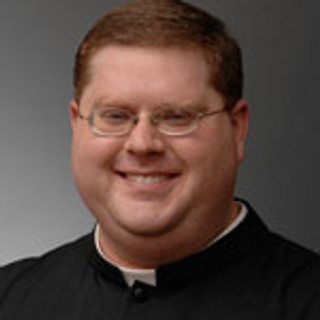
Fr. Scott Haynes

A beautiful Catholic tradition speaks of a crucifix called the Cross of Forgiveness, before which a sinner came again and again to confess his sins. The story reminds us of a profoundly Catholic truth about repentance and mercy. Christ does not delight in the ruin of the sinner. He desires his return. As the Lord says through the prophet Ezechiel:
“Is it my will that a sinner should die, saith the Lord God, and not that he should be converted from his ways, and live?”¹ (Douay-Rheims Bible)
According to tradition, a man burdened by grave and repeated sins came to confession in the Monastery of St. Anne and St. Joseph in Cordoba, Spain. The man approached the priest for confession beneath the crucifix that hung on the wall. The priest, exasperated by the man’s repeated falls, warned him sternly that this would be the last time he would forgive him. Yet after some time, the sinner returned once more, ashamed, broken, and still hoping for mercy. When the priest refused him, the crucified Christ intervened. The Lord’s right arm, so the story says, loosened from the Cross and extended in blessing over the penitent, while a voice declared to the priest:
“It is I who shed My Blood for him, not you.”
Even if the tale is preserved as pious tradition rather than verified history, its theology is unmistakably Catholic: forgiveness comes from Christ’s Passion, and the priest is the instrument of a mercy that does not originate in himself. St. Augustine, speaking of the Church’s ministry of forgiveness, says that
“[Christ] gives remission of sins either of Himself, or through the members of that dove to whom He says, ‘Whosesoever sins ye remit, they are remitted unto them.’”² (New Advent)
That is why this legend harmonizes so deeply with the Gospel. Our Lord did not come to congratulate the sinless, but to seek the lost. In Saint Luke’s Gospel, He receives sinners, searches for the lost sheep, and rejoices when one wandering soul returns.
“There shall be joy in heaven upon one sinner that doth penance.”³
The prodigal son is not met first with a lecture, but with an embrace. Before the son can bargain for a servant’s place, the father restores him with robe, ring, and feast.⁴ The Cross of Forgiveness dramatizes that same mystery. Christ crucified is not indifferent to sin. His wounds prove the horror of sin. Yet those same wounds are the inexhaustible fountain of pardon for the contrite. (Douay-Rheims Bible)
The story also lays bare a danger that can afflict even the devout: the temptation to grow impatient with weakness. A confessor may become severe. A penitent may grow ashamed. Onlookers may conclude that repeated falls must mean repeated hypocrisy. But the Fathers counsel otherwise. St. John Chrysostom exhorts sinners:
“Let us not therefore despair, but having so many motives and good hopes, though we sin every day, let us approach Him, entreating, beseeching, asking the forgiveness of our sins.”⁵
His point is not that sin is trivial, but that despair is itself a snare. The devil would gladly use repeated failure to drive a soul first into presumption, and then into hopelessness. Christ, by contrast, calls the sinner out of hiding and back into the light. (New Advent)
This is why confession is so powerful and so humbling. The sinner must kneel. He must speak. He must stop excusing himself. He must accuse himself. St. Ambrose writes with striking tenderness:
“The Lord knows all things, but He waits for your words, not that He may punish, but that He may pardon.”⁶
What a sentence that is. God already knows the sin better than the sinner does. Yet He still wills that the sinner come forward freely, not dragged like a criminal to judgment, but drawn like a child back to his Father’s house. Ambrose presses the point further:
“If you accuse yourself, you will fear no accuser.”⁷
Confession, then, is not humiliation without hope. It is humiliation that opens into freedom. (New Advent)
The priest in the legend needed the miracle almost as much as the penitent. That too is worth pondering. The sinner needed absolution, but the priest needed remembrance. He needed to remember whose Blo
od was shed, whose authority he bore, whose mercy he pronounced. Christ alone redeems. Christ alone paid the price. Christ alone has the wounds that save. Priests truly forgive sins through the power given by Christ, but they do so as servants of Another. As the risen Lord said to the Apostles,
“Receive ye the Holy Ghost. Whose sins you shall forgive, they are forgiven them; and whose sins you shall retain, they are retained.”⁸
The authority is real, but it is received. The mercy is judicial, but it is still His mercy. (Douay-Rheims Bible)
There is also a word here for every soul that fears it has come back too many times. Many penitents carry a particular sorrow into confession again and again: the old anger, the old impurity, the old addiction, the old vanity, the old cowardice. They begin to wonder whether God is weary of hearing what they are ashamed of saying. The answer of the Gospel is clear: no sinner who truly repents is unwelcome. Saint John reminds us:
“If we confess our sins, he is faithful and just, to forgive us our sins, and to cleanse us from all iniquity.”⁹
And Saint Augustine, preaching on forgiveness, says:
“If Christ has found thousands of sins upon sins, and has yet forgiven all; withdraw not then your mercy, but ask the forgiveness of that large number.”¹⁰
That is exactly the spirit captured in the Cross of Forgiveness. Christ’s mercy is not exhausted before our misery is exhausted. (Douay-Rheims Bible)
At the same time, the story is not permission to treat grace lightly. The sinner in the legend does not come smiling. He comes needy. He comes humbled. He comes asking. Mercy is never opposed to repentance. Rather, mercy makes repentance possible. The same Christ who pardons also says,
“Go, and now sin no more.”
The lowered hand of Christ is not a gesture of indulgence toward evil. It is a gesture of rescue toward the sinner. He blesses in order to raise up. He absolves in order to restore. He forgives in order to transform. (Douay-Rheims Bible)
So whether one tells this as legend, sermon illustration, or devotional reflection, its lesson remains luminous. No priest absolves by his own goodness. No sinner is saved by his own excuses. All depends on the Blood of Jesus Christ. Beneath the Cross, the only fitting words are those of the prodigal son:
“Father, I have sinned against heaven, and before thee.”¹¹
And the only lasting answer is the mercy of the Crucified, who still receives sinners and still rejoices when the lost are found.³⁴ (Douay-Rheims Bible)
Lenten Books from Priestly Press
Footnotes
¹ The Holy Bible, Douay-Rheims Version, Ezechiel 18:23. Online text at DRBO. (Douay-Rheims Bible)
² Augustine, On Baptism, Against the Donatists, bk. 5, chap. 21, in Nicene and Post-Nicene Fathers, first series, vol. 4, ed. Philip Schaff (Buffalo, NY: Christian Literature Publishing Co., 1887), online at New Advent. (New Advent)
³ The Holy Bible, Douay-Rheims Version, Luke 15:7. Online text at DRBO. (Douay-Rheims Bible)
⁴ The Holy Bible, Douay-Rheims Version, Luke 15:20–24. Online text at DRBO. (Douay-Rheims Bible)
⁵ John Chrysostom, Homilies on the Gospel of Saint Matthew, Homily 22, in Nicene and Post-Nicene Fathers, first series, vol. 10, ed. Philip Schaff (Buffalo, NY: Christian Literature Publishing Co., 1888), online at New Advent. (New Advent)
⁶ Ambrose of Milan, Concerning Repentance, bk. 2, chap. 7, sec. 53, in Nicene and Post-Nicene Fathers, second series, vol. 10, ed. Philip Schaff and Henry Wace (Buffalo, NY: Christian Literature Publishing Co., 1896), online at New Advent. (New Advent)
⁷ Ambrose of Milan, Concerning Repentance, bk. 2, chap. 7, sec. 53, online at New Advent. (New Advent)
⁸ The Holy Bible, Douay-Rheims Version, John 20:22–23. Online text at DRBO. (Douay-Rheims Bible)
⁹ The Holy Bible, Douay-Rheims Version, 1 John 1:9. Online text at DRBO. (Douay-Rheims Bible)
¹⁰ Augustine, Sermon 33 on the New Testament, sec. 3, in Nicene and Post-Nicene Fathers, first series, vol. 6, ed. Philip Schaff (Buffalo, NY: Christian Literature Publishing Co., 1888), online at New Advent. (New Advent)
¹¹ The Holy Bible, Douay-Rheims Version, Luke 15:21. Online text at DRBO. (Douay-Rheims Bible)
I can also turn this into a fuller 1,500-word meditation in the same style, with additional Fathers and saints.


Comments