


The Banquet of Divine Mercy
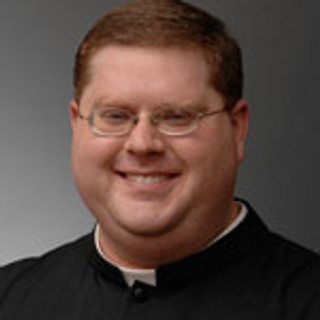
Fr. Scott Haynes
A Meditation on Luke 14:23-24
“Go out into the highways and hedges, and make them come in, so that my house may be filled. For I tell you that none of those who were invited shall taste of my supper.”

Among the parables of Our Lord, few reveal the Heart of God more vividly than the Parable of the Great Supper. It begins with joy, abundance, and generosity. A great feast has been prepared. The master has spared no expense. The table is laden with food. The guests have been invited. Everything is ready. Yet what should have been a scene of rejoicing becomes, at least initially, a story of disappointment. Those who had received the invitation begin to excuse themselves. One is occupied with land, another with business, another with family concerns. Their reasons may seem understandable from a merely human perspective, yet they reveal a tragic spiritual blindness. They fail to recognize the greatness of the gift being offered to them.
The parable is not merely about a banquet. It is about salvation itself. The feast represents the Kingdom of God, the life of grace, the communion offered through Christ, and ultimately the eternal happiness of heaven. The invited guests symbolize those who have received God's call but allow earthly concerns to occupy the place that belongs to Him. Their sin is not necessarily one of open rebellion. Rather, it is the quieter and often more dangerous sin of indifference.
How many souls have lost their fervor not because they hated God but because they became preoccupied with other things? The field, the oxen, and the marriage mentioned in the parable are all good things. Land is not evil. Honest work is not evil. Marriage is one of God's greatest gifts. Yet even good things become dangerous when they are allowed to eclipse the greatest good. The human heart was created for God, and whenever something else occupies the throne that belongs to Him, spiritual disaster follows.
This danger is not confined to the first century. It remains one of the greatest spiritual dangers of our own age. Many people do not reject God outright. Instead, they postpone Him. They intend to pray later. They plan to return to the sacraments eventually. They imagine there will be another opportunity, another season, another year. Yet life has a way of passing swiftly. The things that seem urgent today often appear insignificant when viewed from eternity.
The great tragedy of the parable is that the invited guests do not realize what they are losing. Had they understood who was inviting them and what awaited them at the banquet, no field, no business transaction, and no earthly pleasure could have persuaded them to stay away.
When the servants return and report the refusals, the master responds in a way that reveals the astonishing breadth of divine mercy. Rather than canceling the feast, he commands his servants to go out into the highways and hedges and bring in those who were never originally expected to be guests. Suddenly the poor, the wandering, the forgotten, and the overlooked are welcomed to the table.
Here the parable opens a window into the very Heart of Christ.
Throughout the Gospels, we see Our Lord doing precisely this. He seeks out fishermen beside the Sea of Galilee. He calls a tax collector from his booth. He allows a repentant sinner to wash His feet with her tears. He speaks with a Samaritan woman whom others would have avoided. He promises Paradise to a thief in the final moments of his life. Again and again, those whom society considered unimportant or unworthy find themselves welcomed into the company of the Son of God.
This is the story of salvation itself. From the first pages of the Gospel to the last, God delights in filling His house with unexpected guests.
The shepherds were invited to Bethlehem while kings and scholars slept unaware of the miracle taking place in their midst. Those humble men, keeping watch over their flocks by night, became the first to hear the angelic proclamation that the Savior had been born.
Fishermen mending their nets along the shores of Galilee were invited to become Apostles and foundations of the Church. Their hands were rough from labor, their education was limited, yet Christ entrusted them with the Gospel that would conquer the world.
A tax collector seated at his booth was invited to leave behind his former life and become the Evangelist St. Matthew. The man whom many despised would one day write the very words of Christ for future generations.
The good thief, hanging upon a cross and possessing nothing but a repentant heart, was invited into Paradise before the day had ended. While others mocked the dying Savior, he recognized a King hidden beneath suffering and heard the words every soul longs to hear:
“This day thou shalt be with me in paradise” (Luke 23:43).
Mary Magdalene, whose life had been marked by sin and sorrow, was invited to become one of the first witnesses of the Resurrection. The woman who once wept at the feet of Jesus would later rejoice before the empty tomb.
Again and again, God seeks those whom the world overlooks. He passes by the self-satisfied and the complacent in order to call the humble, the poor, the wounded, and the forgotten. The highways and hedges of the parable are filled with such souls. They are the people who know their need of mercy, who have ceased relying upon themselves, and who are willing to accept the invitation with gratitude.
Indeed, one of the most striking themes running through the Gospels is that those who seemed furthest from the Kingdom often entered it first, while those who appeared closest frequently remained outside. The publican went home justified while the Pharisee remained trapped in his pride. The prodigal son returned to the embrace of his father while the elder brother stood resentfully at the door. The thief entered Paradise while many of the religious leaders rejected the Messiah standing before them. The Master's house is filled not by those who believe themselves worthy of a place at the table, but by those who recognize that every place at that table is a gift of mercy.
The saints never ceased to marvel at this aspect of divine mercy. St. Augustine saw in the highways and hedges a reference to the Gentile nations, who would be called into the Church after many among the chosen people refused the Gospel. Yet the image remains profoundly relevant for every age. The highways are the places where people wander without direction, searching for happiness in things that can never satisfy. The hedges are the hidden corners where the lonely, the wounded, and the forgotten often find themselves. It is precisely there that Christ sends His servants.
One of the most moving illustrations of this truth can be found in the life of St. Camillus de Lellis. Before his conversion, he was a soldier, a gambler, and a man whose life seemed destined for ruin. Again and again, grace pursued him. God placed people in his path, spoke to him through circumstances, and offered him opportunities to change. Finally, after hearing a sermon that pierced his heart, Camillus surrendered to God's mercy. The man who once squandered his life became one of the Church's great saints and dedicated himself to caring for the sick and dying. He had been found on the highways of life and brought into the Master's house.
Such stories remind us that God delights in surprising the world. Those whom others dismiss are often those whom He raises up. The Gospel is filled with examples. St. Mary Magdalene became a witness of the Resurrection. St. Matthew the tax collector became an Evangelist. St. Augustine, who spent years wandering far from God, became one of the greatest doctors of the Church. The history of Christianity is, in many respects, the history of God filling His house with unexpected guests.
Perhaps the most beautiful line in the parable is the master's explanation for his command:
“That my house may be filled.”
These words reveal a profound truth about the God' will. God desires a full house. He desires heaven to be populated. He desires souls to share His joy. Every page of Sacred Scripture bears witness to this longing. The Father sends the Son into the world because He desires to save humanity. The Son stretches out His arms upon the Cross because He desires to draw all men to Himself. The Holy Ghost continually pours grace into human hearts because He desires to sanctify and transform them.
The Eucharist offers a particularly striking fulfillment of this parable. At every Mass, the invitation goes forth once again. The altar becomes a foretaste of the heavenly banquet. Christ Himself becomes both Host and Food. The Church echoes the words of the Book of Revelation:
“Blessed are they that are called to the marriage supper of the Lamb” (Apoc. 19:9).
Yet even here, the tragedy of the parable remains possible. Some respond eagerly to the invitation. Others remain occupied with lesser concerns. The same Christ waits in the tabernacle. The same sacrifice is offered upon the altar. The same grace is available. The difference lies in the response of the human heart.
The concluding warning of the parable is therefore both solemn and necessary:
“For I tell you that none of those men that were invited shall taste of my supper.”
These words remind us that grace can be refused. God never forces Himself upon anyone. He invites, He calls, He pursues, He encourages, and He warns, but He respects the freedom He has given to His creatures. The invitation is genuine, and so is the possibility of rejecting it.
For this reason, the parable invites each of us to examine our own hearts. What excuses have we offered? What fields, oxen, or distractions have occupied the place that belongs to God? What opportunities for prayer, worship, and conversion have we postponed?
The good news is that the invitation remains open. The feast has not ended. The Master still sends His servants into the highways and hedges. Christ still calls sinners to repentance. The doors of the Church remain open. The confessional remains available. The Eucharistic Lord continues to wait patiently for those who will come.
One day, however, the invitation will become a judgment. The time for choosing will end, and the eternal banquet will begin. May we therefore respond while grace is offered, embracing the invitation with gratitude and joy. Then, when the pilgrimage of this life is finished, we shall enter the Master's house and discover that every sacrifice made for Christ was small compared to the glory prepared for those who accepted His call.
Priestly Press


Bibliography
Augustine. Sermons (230–272B) on the Liturgical Seasons. Translated by Edmund Hill. The Works of Saint Augustine III/7. Hyde Park, NY: New City Press, 1993.
Augustine. The City of God. Translated by Henry Bettenson. London: Penguin Books, 2003.
Aquinas, Thomas. Catena Aurea: Commentary on the Four Gospels Collected out of the Works of the Fathers. Vol. 3. Oxford: John Henry Parker, 1845.
Aquinas, Thomas. Summa Theologiae. Translated by the Fathers of the English Dominican Province. New York: Benziger Brothers, 1947.
Chrysostom, John. Homilies on the Gospel of Matthew. In Nicene and Post-Nicene Fathers, First Series, Vol. 10. Edited by Philip Schaff. Grand Rapids, MI: Eerdmans, 1989.
Gregory the Great. Forty Gospel Homilies. Translated by David Hurst. Kalamazoo, MI: Cistercian Publications, 1990.
The Holy Bible. Douay-Rheims Version.



Comments