


Saint Henry: The Holy Emperor Who Walked with Angels
Fr. Scott Haynes
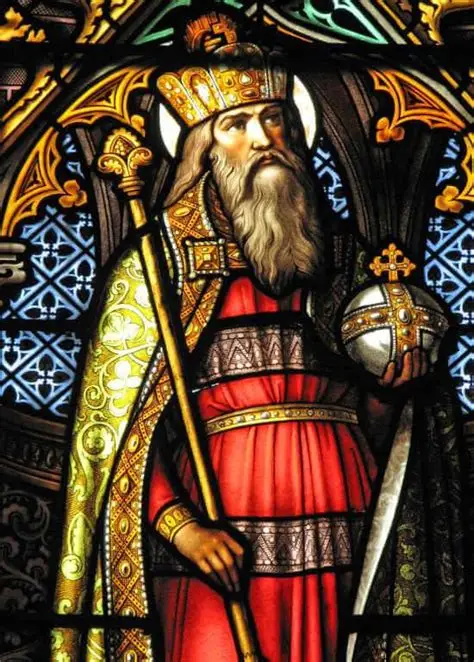
Imagine being born into royalty, raised in castles, surrounded by luxury—and yet choosing prayer over power, humility over pride, and service over self. That was the life of St. Henry, a man who held the highest earthly crown of his time yet never let go of the heavenly one.
St. Henry, also known as Henry II, Holy Roman Emperor, wasn’t just a king—he was a warrior-saint, a mystic-leader, and a model of holiness for anyone who wants to follow Christ in the real world. His feast is celebrated on July 13, and his story, filled with castles, battles, visions, miracles, and deep faith, is one that speaks powerfully—even today.
Born to Rule, Destined for Holiness
Henry was born in the year 972 in the town of Bad Abbach, in the region of Bavaria (modern-day Germany). His father was the Duke of Bavaria, and his mother, Gisela, was known for her piety. From birth, young Henry was raised to rule—but God had much more in store for him.
As a boy, he was sent to the cathedral school at Hildesheim, where he studied under St. Wolfgang, one of the holiest bishops of the time. Unlike many royal children who became arrogant or wasteful, Henry was drawn to the life of prayer, penance, and wisdom. He learned Latin, studied the Scriptures, and came to know that true kingship meant serving God first.
Though he loved peace and the Church, Henry was also trained in the art of battle. The world was unstable—nobles were always fighting for land, and even kings sometimes waged war against bishops. Henry knew that if he were to reign, he would have to be both a sword-wielding warrior and a servant of God.
The Unexpected King
Henry's path to the throne wasn’t exactly smooth. When his father died, Henry became Duke of Bavaria. But in the year 1002, something shocking happened: Emperor Otto III died suddenly with no heir. The German nobles gathered to elect the next king—and after much debate, they chose Henry.
He was crowned King of Germany in Mainz that same year. He would later be crowned Holy Roman Emperor in Rome in 1014 by Pope Benedict VIII. But here’s the astonishing part: instead of clinging to his throne, Henry offered his rule to God. He placed his kingdom under the protection of St. Mary, declaring himself her humble servant. He often said,
“I am king by the grace of God, not by my own merit.”
And he lived it.
A Ruler with a Rosary
Henry didn’t separate his faith from his politics. He saw his position not as a privilege but as a responsibility—a divine calling to make his lands holy. He worked tirelessly to bring justice to his people, reform corrupt bishops, restore decaying monasteries, and strengthen the Church’s role in society. He founded and funded many churches and abbeys, especially Bamberg Cathedral, which became one of the most magnificent churches of its time.
He didn’t hesitate to go to war when necessary, especially to protect the Church from enemies. But he never did it for selfish gain. Before battles, he would fast, pray, and go to confession, placing his army under the protection of saints and angels. In one battle, when the enemy greatly outnumbered him, Henry reportedly saw a vision of St. Lawrence, who promised him victory—and he won.
Married but Chaste
Henry’s life became even more inspiring when you look at his marriage. He married St. Cunegunda, a noblewoman known for her purity and holiness. Together, they made a vow of chastity, choosing to live like brother and sister out of love for God.
This may sound strange to modern ears, but to them it was a sign of radical trust in God’s grace. They deeply loved each other, and Cunegunda became a powerful partner in Henry’s mission. She advised him, comforted him, and served the poor alongside him. They never had children, but they left behind a spiritual family: thousands of monks, nuns, priests, and laypeople who were inspired by their example.
Sickness, Visions, and Miracles
As Henry aged, he was often sick. Some say it was a mysterious illness that would come and go, perhaps a trial allowed by God to keep him humble.
During one serious illness, Henry was bedridden for weeks. One night, as he lay in pain, Sts. Peter and Paul appeared to him in a dream, accompanied by an army of angels. They brought him strength and healing and reminded him that his true kingdom was in Heaven.
It wasn’t the only time Henry had visions. He often consulted the saints in prayer before making major decisions. He had a particular devotion to St. Benedict, the founder of Western monasticism. In fact, he would sometimes leave court and go live in a monastery for days—fasting, praying, and sleeping on the ground.
He Tried to Become a Monk!
Here’s a story that few know: After years of ruling justly and leading countless souls to God, Henry decided he wanted to leave everything and become a monk. Yes—a Holy Roman Emperor wanted to trade his crown for a religious habit! He went to the famous monastery of Monte Cassino in Italy, founded by St. Benedict himself. Falling at the abbot’s feet, Henry begged to be admitted as a simple brother.
But the abbot, shocked and humbled, refused. “Your place is in the world,” he told Henry. “God has crowned you so that you may crown others with grace.” Henry obeyed. He went back to his throne—not because he loved power, but because he loved God’s will more than his own. And that’s what made him a saint.
A Peaceful Passing
Henry died on July 13, 1024, at the age of 52. He had reigned for 22 years. His final words were said to have been a prayer of surrender:
“Into Thy hands, O Lord, I commend my spirit.”
He was buried in Bamberg Cathedral, which he had built in honor of God. Miracles began to be reported at his tomb—people were healed, souls were converted, and pilgrims came from across Europe to pray at the grave of the emperor-saint.
In 1146, Pope Eugene III canonized him as St. Henry, making him the only German emperor to be declared a saint by the Church.
Saint and Warrior: A Role Model for Youth
What makes St. Henry so inspiring is how real he was. He wasn’t a hermit or a mystic hidden away in the mountains. He was a man who lived in the middle of battlefields, political games, court intrigues, and heavy responsibilities—and still became a saint.
He shows us that holiness is possible anywhere—in castles, in classrooms, on sports fields, or in city streets. He wasn’t soft. He was a fighter—but he fought for truth. He wasn’t showy—but he built things that would last forever. He didn’t chase pleasure—but found joy in God’s will. If you’re a young person today wondering what it means to live a holy life in a loud, complicated world, let St. Henry be your guide.
Five Things Young Catholics Can Learn from St. Henry
Your talents belong to God. Henry could have lived selfishly—but he used his gifts to serve others. Ask yourself: how are you using your time, talents, and energy?
Prayer should shape your decisions. Before battles or court rulings, Henry prayed. Do you bring your problems to God in prayer before acting?
Purity is powerful. Henry and Cunegunda lived chastely. In a culture obsessed with lust, their example shows the strength and beauty of purity.
Live for eternity, not popularity. Henry had fame and fortune—but he wanted Heaven more. Remember: the crown that matters most is eternal.
Serve with humility. Even as emperor, Henry washed the feet of the poor. Can you find small ways to serve others with love and humility?
A Final Word from a Saint
St. Henry’s legacy lives on—not just in stone cathedrals or ancient chronicles, but in the hearts of those who want to follow Christ courageously.
Let his words guide you:
“I am the servant of servants. I must offer my life daily for the good of the Church and for the people God has entrusted to me.”
Whether you’re a student, a leader, a dreamer, or a struggler—St. Henry reminds you that God can make you a saint wherever you are.
Prayer to St. Henry
O glorious St. Henry, who ruled with justice and loved with holiness, teach us to serve Christ faithfully in our daily duties. Help us to seek Heaven while walking through the world. Pray that we, like you, may surrender our will to God's, and be found worthy to wear a crown of glory forever. Amen.


Comments