


Our Lady of Montserrat Heals St. Josemaria
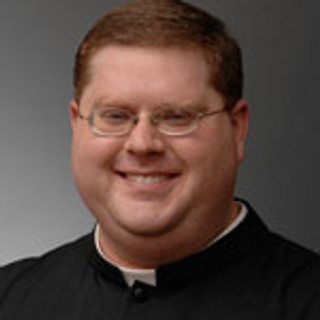
Fr. Scott Haynes

Feast of Our Lady of Montserrat
April 27
There are moments in life when words fail us. When suffering presses too deeply, when confusion clouds the mind, when even prayer seems distant or difficult. In such moments, the Church places on our lips not a long formula, but a single word—ancient, universal, and full of power:
Mother.
This is how the Christian heart learns to pray when it can no longer rely on its own strength. It is the cry of the child who does not reason, but trusts. And it is the cry that finds an answer in the heart of the Blessed Virgin Mary.
On this feast of Our Lady of Montserrat, we are invited to rediscover that cry.
For centuries, the mountain sanctuary of Montserrat has drawn pilgrims from every walk of life. Rising like a fortress of stone toward heaven, it speaks of permanence, of refuge, of something unshakable.
There, before “La Morenita,” the faithful have poured out their hearts—bringing joys, sorrows, illnesses, and sins. And generation after generation has discovered that Mary receives all with a mother’s tenderness.
Among those pilgrims was St. Josemaría Escrivá, whose devotion to Our Lady of Montserrat was marked by a deep and personal love. He did not approach her as an abstract figure of theology, but as a living Mother, attentive and near. Again and again, he returned to her, placing his life and mission into her hands.
He urged others to do the same:
“Go to Mary with the tender devotion of a child; she is your Mother.” (The Way, no. 459)
This childlike trust lies at the heart of authentic Marian devotion. It is not sentimental, but profoundly theological. For if Christ has given us His Mother, then to go to her is to follow His own gift.
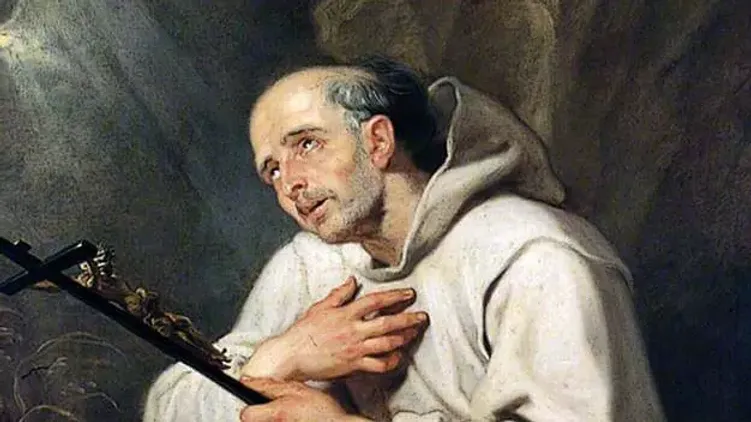
The Fathers of the Church saw this clearly. St. Bernard of Clairvaux exhorts the faithful in words that have echoed through the centuries:
“In dangers, in doubts, in difficulties, think of Mary, call upon Mary… Let her name be ever on your lips, ever in your heart.” (Homily II on the Missus Est)
There is a realism in this counsel. Life is filled with dangers, doubts, and difficulties. Marian devotion does not remove these, but it transforms how we pass through them. It gives us a companion, a guide, a Mother.
This truth was tested in the life of St. Josemaría in a dramatic way. On April 27, 1954, after years of suffering from severe diabetes, he experienced a sudden and grave medical crisis following an insulin injection. His condition deteriorated so quickly that death seemed near. Those around him feared that the end had come.
And yet, in a manner both quiet and extraordinary, the situation changed. From that day forward, he recovered fully from the illness. He accepted this not as chance, but as a sign—a maternal intervention, a gesture of care from the Blessed Virgin whom he loved so deeply.
Such moments remind us that God’s grace often comes through hidden channels, and that Our Lady’s intercession is not a poetic idea, but a living reality.
St. John Damascene expresses this mystery with striking clarity:
“Hail, O Mary, through whom all creatures are renewed; hail, through whom the Creator becomes a child.” (Homily on the Nativity of the Virgin)
If through her the Creator entered the world, then through her maternal care we are continually drawn back to Him.
St. Josemaría, reflecting on human weakness and divine mercy, gives us one of the most striking images in modern spiritual writing:
“If I were a leper my mother would hug me. She would kiss my wounds without fear or hesitation. Well then, what would the Blessed Virgin Mary do? When we feel we are like lepers, all full of sores, we have to cry out: Mother! And the protection of our Mother will be like a kiss upon our wounds, which obtains our cure” (The Forge, no. 190).
There is something profoundly consoling here. We often imagine that we must first be healed before approaching God. But the Gospel reveals the opposite. It is the wounded who are invited first. And Mary, as Mother, does not stand at a distance. She draws near, even to what we would hide.
St. Augustine of Hippo deepens this insight when he speaks of Mary’s spiritual motherhood:
“She is the mother of the members of Christ… because she cooperated by charity that the faithful might be born in the Church.” (De Sancta Virginitate, 6)
If she is truly our Mother in the order of grace, then every aspect of our life—our suffering, our conversion, our perseverance—falls within her care.
St. Josemaría returns again to this theme of confidence:
“Have recourse to the Blessed Virgin Mary with confidence, and you will obtain whatever you ask.” (The Forge, no. 155)
And elsewhere, with a simplicity that reveals deep faith:
“To Jesus always through Mary.” (The Way, no. 495)
Here is the path. Not complicated, not inaccessible. A path walked by saints, pilgrims, and ordinary souls alike.
On this feast of Our Lady of Montserrat, we are invited to walk that path anew. Perhaps we carry burdens that feel too heavy. Perhaps we struggle interiorly, or worry about those entrusted to our care. Perhaps we feel distant from God, unsure how to begin again.
Then let us begin here.
Let us go, in spirit, to that mountain shrine. Let us kneel before Our Lady. Let us entrust everything to her, without calculation, without fear.
And let us say, with the simplicity of a child:
Mother.
For in that word is trust. In that word is healing. In that word is the beginning of a deeper life in Christ.
Our Lady of Montserrat, pray for us.
Bibliography
Augustine of Hippo. De Sancta Virginitate.
Bernard of Clairvaux. Homilies on the Missus Est.
Damascene, John. Homily on the Nativity of the Virgin Mary.
Escrivá, Josemaría. The Way.
Escrivá, Josemaría. The Way.
Escrivá, Josemaría. The Forge.
Escrivá, Josemaría. The Forge.
Priestly Press


Comments