


Meditation for the 19th Sunday after Pentecost and the Canonization of St. Bartolo Longo
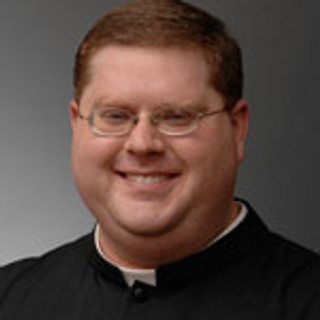
Fr. Scott Haynes

“Put on the Lord Jesus Christ.” (Romans 13:14)
The Gospel for the 19th Sunday after Pentecost in the traditional Roman Rite tells of a king who prepares a wedding feast for his son. The invited guests refuse to come; some mock the messengers, others go about their business. Finally, the king opens the doors to all who will come—“both good and bad”—yet one guest enters without a wedding garment and is cast out into the outer darkness. The parable ends with a warning that resounds through the centuries: “Many are called, but few are chosen.”
This wedding garment represents the life of grace—that white robe received at baptism, the pledge of divine friendship and purity of faith. The Catechism says that baptism clothes us with Christ Himself, as St. Paul writes: “For as many of you as have been baptized in Christ have put on Christ.” But we can soil this garment through sin, and to enter the banquet unrepentant is to insult the King who offers His Son’s very Body and Blood as our feast.
It is fitting, then, that this same day marks the canonization of St. Bartolo Longo, a man who once cast off his baptismal garment in the most dramatic way—and who, by grace, put it on again.
From Darkness to Light
Born in 1841 near Brindisi, Bartolo Longo grew up in a devout Catholic family, yet as a young law student in Naples he was seduced by the intellectual fashions of his time. The faith seemed old-fashioned, and the Church oppressive. Drawn into the occult, he took part in séances and even served as a priest in a Satanic cult. He became a tragic example of the man who accepts the invitation to the wedding feast yet refuses the garment of sanctity. Like the man in the parable, he was present—but not clothed in grace.
But God’s mercy pursued him. Through the prayers of friends and the patient guidance of a Dominican friar, Bartolo’s soul was rescued. He renounced his past, made a thorough confession, and began to make reparation. The grace of conversion struck him deeply. “If I continue to live as I have,” he said, “I shall end in despair. But if I work for the salvation of others, I shall secure my own.” Thus he resolved to dedicate his life to spreading devotion to the Rosary of Our Lady and to serving the poor and abandoned.
The New Man Clothed in Christ
In the Epistle for this Sunday, St. Paul exhorts: “Put off the old man that belongs to your former manner of life… and be renewed in the spirit of your mind; put on the new man, who according to God is created in justice and holiness of truth.” Bartolo Longo lived this transformation. His “old man” had been clothed in the arrogance of reason divorced from faith, in the illusions of occult power. His “new man” was clothed in humility, penitence, and a Marian faith that transfigured his whole being.
He became an apostle of the Rosary. He rebuilt the faith of countless souls by founding the Shrine of Our Lady of the Rosary at Pompeii, on land once desecrated by pagan ruins and moral corruption. There he restored not only an altar, but a whole people’s faith—teaching them that the true wedding garment is a heart purified by grace, washed in the Precious Blood, and adorned with the virtues of Our Lady.
The Banquet of Mercy
Every time Bartolo Longo entered the church at Pompeii, he saw the Eucharist as the foretaste of the heavenly wedding feast. Having known the desolation of being outside the banquet hall, he never forgot that the Eucharist must be received worthily, as Christ warns in today’s Gospel. His own confession had been a return to the feast, and he longed that others should find their place at the table, properly clothed in grace.
How did he prepare others for this feast? By confession, prayer, and the Rosary. He called the Rosary “the chain of salvation” that binds the sinner to Mary, who leads every soul back to Christ. Through this devotion, he clothed thousands in white once more—souls who had cast off their baptismal robe and found it again through the Mother of Mercy.
His life shows us that conversion is not a single event but a continual re-clothing of the soul. As the Church’s liturgy reminds us today, the King Himself provides the garment. Grace is free—but we must put it on.
Lessons from the Wedding Feast
The parable’s warning is clear: those who enter the feast without conversion are cast out. But the invitation remains open to all. God desires no one’s exclusion. The white garment is offered to every sinner who will repent and confess. How fitting, then, that Bartolo Longo—the man once consecrated to Satan—now stands canonized among the saints, clothed in eternal light! His conversion proves the inexhaustible mercy of the King who never stops inviting.
For us, this Sunday’s readings ask: Am I wearing my wedding garment? Have I preserved the grace of my baptism through confession and prayer? Have I allowed the old man to die, that the new man in Christ might live?
The Church calls us today to that inner renewal St. Paul describes—a renewal “in the spirit of your mind.” It is not enough to admire the faith from afar, or to go through its motions; we must be clothed with it, heart and soul.
The Garment of Mary
In a beautiful way, St. Bartolo’s devotion to the Rosary and the Virgin Mary shows us how to keep our garment white. Mary, clothed with the sun, is the image of the Church, the Bride adorned for her Bridegroom. To take the Rosary in hand is to take up the garment of faith anew—to wrap oneself in the mysteries of Christ’s life, death, and resurrection. Through Mary’s intercession, Bartolo’s tattered soul was repaired, and he was clothed again in grace. So too can we, no matter how far we have fallen.
Conclusion: Many Are Called, Few Are Chosen
On this day of his canonization, St. Bartolo Longo preaches anew through his life: There is no sin that cannot be forgiven, no soul too lost to be clothed in light. The King still calls us to the banquet. The garment still waits to be worn. In confession, in the Eucharist, in the Rosary, the King Himself provides what we need.
“Friend, how did you come in here without a wedding garment?” Christ asks each of us. May we, through the intercession of St. Bartolo Longo and the prayers of Our Lady of the Rosary, be found clothed in sanctifying grace, ready for the wedding feast of the Lamb.



Comments