


Do What I Tell You, and There will be Peace
Updated: May 17
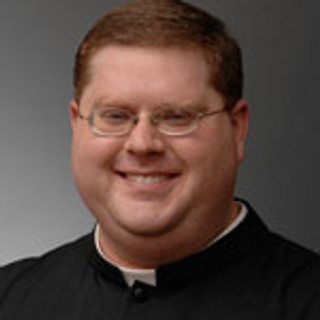
Fr. Scott Haynes
The Rosary, Providence, and the Quiet Power of God

There are moments in history when everything appears to be governed by visible forces—by armies, by governments, by negotiations conducted behind closed doors—and yet, from time to time, God permits us to glimpse something deeper, something hidden, something that reminds us that the true currents of history do not run only through parliaments and battlefields, but also through hearts lifted in prayer.
Such a moment unfolded in the years following the Second World War in the country of Austria, a land that had endured devastation, humiliation, and uncertainty, and which, even after the guns had fallen silent, found itself divided and occupied by foreign powers, with the eastern portion, including the historic city of Vienna, placed under the control of the Soviet Union. The presence of Soviet troops was not merely a political inconvenience; it was a constant reminder of a looming ideological domination that had already engulfed other nations in Eastern Europe, and many Austrians feared, with reason, that their homeland might soon be drawn permanently behind the Iron Curtain.
For ten years, the situation remained unresolved, as diplomats negotiated and renegotiated, while the ordinary people lived in a state of suspended hope, unsure whether freedom would ever be restored, and it was precisely in this atmosphere of prolonged tension and apparent stalemate that God raised up an unlikely instrument: a Capuchin priest named Fr. Petrus Pavlicek, a man who had himself suffered as a prisoner of war and who had seen firsthand the harsh realities of the system that now overshadowed his country.
After his return, Father Pavlicek made a pilgrimage to the Marian shrine of Mariazell Basilica, that ancient place of prayer so deeply woven into the spiritual life of Austria, and there, in the stillness of prayer before the Blessed Virgin Mary, he experienced not an outward vision, but a profound interior illumination, a conviction that impressed itself upon his soul with such clarity that he could not ignore it. He understood that the Mother of God was entrusting him with a mission, and that this mission was at once simple and demanding: to call the people to the Rosary, to summon them to prayer, and to invite them to place their nation confidently into her maternal hands. The words that formed within him, which he later recounted as the essence of that interior experience, were these:
“Do what I tell you, and there will be peace.”⁵
He did not interpret these words as a vague encouragement, but as a concrete directive, a call to action rooted not in political strategy but in spiritual fidelity, and so he began to preach—not with rhetoric designed to stir agitation, nor with proposals for resistance, but with a steady and unwavering appeal that the faithful should take up the Rosary, pray it daily, and persevere in that prayer with trust in God’s providence.
At first, the response was modest, as one might expect, for the proposal itself seemed almost disproportionate to the magnitude of the problem, and yet, as is so often the case in the life of the Church, what begins in hiddenness grows by fidelity rather than by spectacle. Families began to pray together in their homes, parish communities took up the Rosary with renewed devotion, and gradually, what had begun as a quiet initiative developed into a national movement known as the Rosary Crusade of Reparation, a movement that called not only for petition but also for conversion, recognizing that the wounds of the age were not merely political but moral and spiritual.
By the early 1950s, this movement had reached a remarkable scale, with hundreds of thousands of Austrians committed to the daily recitation of the Rosary, and public expressions of this devotion began to appear with increasing visibility, as great processions formed in Vienna, especially on the feast of the Holy Name of Mary, during which tens of thousands of the faithful would walk together through the streets, praying in unison, their voices rising not in protest but in supplication, creating an atmosphere that was at once solemn and hopeful, a visible sign of a people united not by ideology but by faith.
From a purely external perspective, these acts of devotion did not immediately alter the political situation, for the negotiations continued to stall, and the presence of foreign troops remained unchanged, and yet, beneath the surface, something was being transformed, something that cannot be measured by political analysis alone, for the hearts of the people were being shaped by perseverance in prayer, and their hope was being purified and deepened.
Saint Augustine of Hippo offers a profound insight into this reality when he writes that what matters in prayer is not the length of words but the endurance of desire, explaining that “long prayer is not the prolonging of speech, but the prolonging of desire,”¹ a teaching that allows us to understand the Rosary Crusade not merely as a repetition of formulas, but as the steady offering of a nation’s longing before God, a longing that refused to give way to despair. In a similar vein, John Chrysostom speaks of prayer as “the root and fountain of innumerable blessings,”² reminding us that the most decisive actions in the life of the Church often take place in hidden ways, like roots growing beneath the soil, unseen yet essential.
Then, in the providence of God, the long-awaited change began to unfold, as shifts in the international situation, including developments within the Soviet Union following the death of Joseph Stalin, created new possibilities for negotiation, and Austria, for its part, made the significant decision to adopt a position of permanent neutrality, a step that proved crucial in making an agreement possible without forcing either side into humiliation. These political factors were real and important, and any honest account must acknowledge them, and yet, for those who had prayed, these developments were not seen as isolated or accidental, but as part of a larger tapestry in which divine providence was at work through human events.
On May 15, 1955, the Austrian State Treaty was signed at the Belvedere Palace in Vienna, restoring the sovereignty of Austria and setting in motion the withdrawal of all occupying forces, and by October of that year, the last foreign troops had departed, leaving the nation free once more, and what made this outcome particularly striking was the manner in which it occurred, for it was achieved without violence, without uprising, without bloodshed, in a way that seemed almost to defy the expectations of the time.
For those formed by faith, this peaceful resolution was not merely a fortunate political outcome, but a sign of something deeper, a confirmation that prayer had not been in vain, and Father Pavlicek himself, reflecting on these events, attributed the result not to his own efforts nor even primarily to diplomatic skill, but to the intercession of the Blessed Virgin Mary, recognizing in the liberation of Austria the fruit of a sustained and united appeal to heaven.
The saints help us to understand this interpretation, for St. Louis de Montfort teaches that when prayer is offered publicly and in common, it possesses a particular efficacy, since it unites the faithful in a single act of supplication that calls down God’s mercy in abundance,³ while Padre Pio, speaking from his own profound experience of the spiritual life, referred to the Rosary as “the weapon for these times,”⁴ a phrase that captures well the paradox of Christian strength, which does not rely on force but on grace.
And perhaps no one expresses the Marian dimension of this story more beautifully than Bernard of Clairvaux, who, in urging the faithful to turn to the Blessed Virgin in every trial, writes, “In dangers, in doubts, in difficulties, think of Mary, call upon Mary; let her name be ever on your lips, ever in your heart; and that you may obtain the help of her prayer, neglect not the example of her life,”⁵ words that seem almost to describe the path that Austria followed in those difficult years.
My brothers and sisters, the lesson of this history is not that prayer replaces action, nor that complex problems admit of simple solutions, but rather that prayer is itself a real and indispensable form of action, one that engages the deepest level of reality, where God’s grace operates in ways that transcend our immediate understanding. Saint Augustine reminds us that God, who created us without us, does not save us without us,¹ and thus invites our cooperation, not only through our external efforts, but through our interior fidelity.
The story of Austria invites us, therefore, to examine our own lives and to ask whether we truly believe in the power of prayer, whether we take seriously the means that God has placed within our reach, or whether we allow ourselves to be shaped by a worldview that sees only what is visible and measurable.
For in the end, the Rosary, so simple that it can be prayed by a child, became in Austria a thread strong enough to bear the hopes of a nation, a thread woven day after day through acts of faith, until at last it formed part of the fabric through which God brought about a peaceful and unexpected liberation.
May we, then, learn from their example, and may we not hesitate to take up the Rosary with renewed confidence, entrusting to God, through the intercession of the Blessed Virgin Mary, all that weighs upon our hearts, believing that He who acted in the past remains faithful in the present, and that no prayer offered in faith is ever lost.
Amen.
Footnotes
1. Augustine of Hippo, Letter 130, https://www.newadvent.org/fathers/1102130.htm
2. John Chrysostom, Homilies on Prayer, https://www.newadvent.org/fathers/
3. Louis de Montfort, The Secret of the Rosary, https://www.montfort.org.uk/Writings/ASR.php
4. Padre Pio, sayings compiled, https://www.ewtn.com/catholicism/devotions/padre-pio-127
5. Bernard of Clairvaux, Homily II on the Missus Est, https://www.ewtn.com/catholicism/library/homilies-in-praise-of-the-blessed-virgin-mary-11092
Priestly Press



Comments