


Blessed Karl of Austria: A Faithful Heart amid a Crumbling World
Fr. Scott Haynes
A Meditation for his feast on October 21
When Blessed Karl of Austria married Princess Zita of Bourbon-Parma, he understood that their life together had a destination beyond the palaces and ceremonies surrounding them. On the eve of their wedding, he told her,
“Now we must help each other attain heaven.”¹
Those words would guide them through the happiness of family life, the burdens of war, and the sorrow of exile. When everything familiar began to disappear, the promise remained: they belonged to God, and they would help each other remain faithful.
The Church commemorates Karl on his wedding anniversary, October 21, drawing our attention to the holiness he pursued as a husband and father. Before we consider the emperor standing beneath a crown, we should consider the Christian kneeling beside his wife. His life invites us to discover how love for God can shape the responsibilities already placed in our hands.
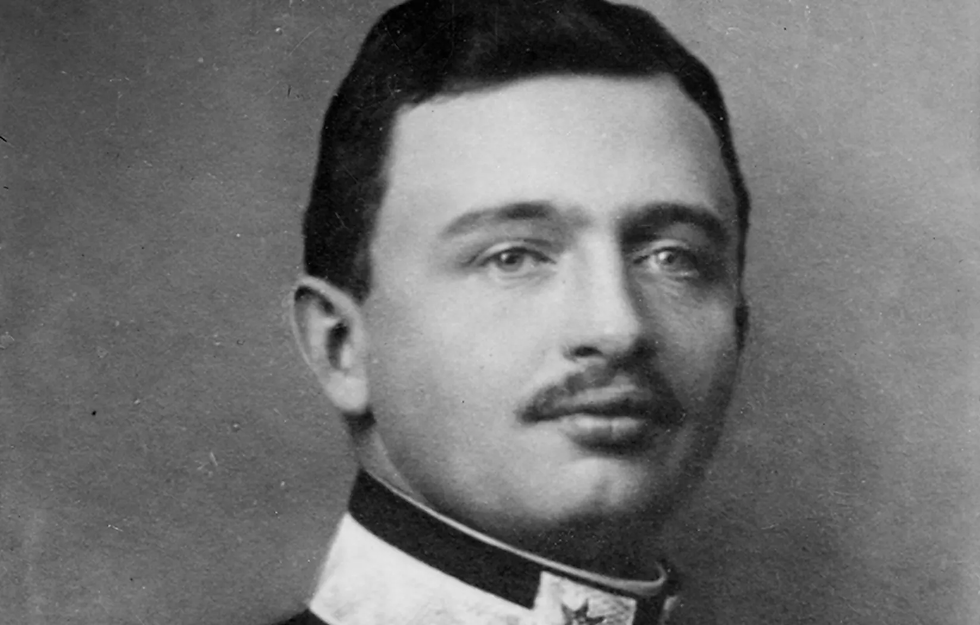
Born at Persenbeug in Lower Austria on August 17, 1887, Karl grew up within the Habsburg dynasty, with a Catholic formation that encouraged devotion to the Holy Eucharist and the Sacred Heart of Jesus. The assassination of Archduke Franz Ferdinand in June 1914 made him heir to the throne, and the death of Emperor Franz Joseph on November 21, 1916, brought him to power during the First World War. He was crowned King of Hungary on December 30, 1916.² At twenty-nine, he inherited an empire exhausted by a conflict that had already brought suffering to millions.
Such responsibility helps us understand the importance of his prayer. Karl sought God’s guidance before important decisions, recognizing that authority did not make him self-sufficient.² Our Lord’s words illuminate that dependence:
“Without me you can do nothing” (John 15:5).
A ruler could receive reports, summon ministers, and issue commands, yet still need the humility to kneel before Christ and ask for wisdom.
We may never face decisions that affect nations, but we know the temptation to act as though everything depends upon our own strength. We worry, hurry, and rehearse possible disasters, while prayer is postponed until the work is finished. Karl’s example encourages us to bring our duties into the presence of God before anxiety takes possession of them. A few moments before the tabernacle can become an act of surrender in which we ask for the grace to serve faithfully.
His marriage gave that service a deeply personal expression. Karl and Zita had eight children, the youngest of whom was born after his death. Their home included daily family prayer, religious instruction, and devotion to the Sacred Heart. Karl himself helped teach his children their prayers and catechism, taking an active interest in the faith they were learning.³
Saint Paul writes,
“Husbands, love your wives, as Christ also loved the church, and delivered himself up for it” (Ephesians 5:25).
This love requires more than affection, although affection is precious. It calls a husband to give himself for the good of his wife, and it calls Christian spouses to encourage one another toward eternal life. Karl’s promise to Zita makes this teaching wonderfully concrete: the person entrusted to my love is someone I must help toward heaven.
That purpose reaches into ordinary family life. It shapes the patience with which a parent answers a child, the willingness of spouses to forgive, and the decision to make room for prayer in a crowded day. Children learn something about God from what their parents repeatedly place first. When faith is lived with tenderness and consistency, the home becomes a place where the Gospel can be seen as well as heard.
Karl carried this understanding of service into his public responsibilities. He worked to end the war, supported the peace efforts of Pope Benedict XV, and pursued secret negotiations through his brothers-in-law, Princes Sixtus and Xavier of Bourbon-Parma. Those efforts failed to secure peace, and the disclosure of the negotiations damaged his political position.⁴
“Blessed are the peacemakers: for they shall be called children of God” (Matthew 5:9).
Karl’s attempts give us an opportunity to consider how demanding this beatitude can be. Peacemaking requires patience, courage, and a willingness to risk criticism. It also requires attention to the people who bear the cost of conflict: the wounded soldier, the grieving mother, the hungry child, and the family waiting for someone who will never return.
Most of us exercise this responsibility within a smaller circle, where a harsh word can deepen a quarrel and a humble apology can begin to heal it. We become peacemakers when we refuse to circulate a damaging rumor, when we listen before judging, and when we seek reconciliation without surrendering the truth. The desire for peace becomes credible through the sacrifices we are willing to make for it.
The collapse of Austria-Hungary in 1918 brought Karl’s reign to an end. He withdrew from participation in government without formally abdicating, and two unsuccessful attempts to recover the Hungarian throne in 1921 were followed by exile on the Portuguese island of Madeira. There his family experienced severe financial hardship, and he eventually became gravely ill with pneumonia.⁵
For a man who had wanted to serve his peoples, the loss of his public role must have been an immense trial. His story brings us close to a question that suffering often awakens: How can I continue to love when I can no longer do what I once believed was my life’s work?
Christ gives us the pattern in Gethsemane:
“But yet not my will, but thine be done” (Luke 22:42).
These words express a costly trust, spoken amid real anguish. Christian surrender allows us to grieve what has been lost while continuing to place ourselves in the Father’s hands. We can seek relief, accept help, and still offer God the suffering that remains.
Karl accepted his final illness as an offering for the peace and unity of his peoples, and he forgave those who had acted against him.⁶ His opportunities had narrowed, but his capacity to love had not disappeared. From a sickbed, he could still pray, forgive, encourage his family, and entrust the future to God.
This is a consoling lesson for anyone living through illness, unemployment, bereavement, or the limitations of age. Our usefulness cannot be measured entirely by what we accomplish in public. A hidden act of patience, a prayer offered through pain, or forgiveness given after a deep injury can become a profound expression of charity.
Karl died on April 1, 1922, at the age of thirty-four, turning toward the Blessed Sacrament.⁶ He was beatified on October 3, 2004.⁷ The young emperor who had lost his earthly throne left behind a witness that continues to call others toward Christ.
Saint Paul writes,
“I have fought a good fight, I have finished my course, I have kept the faith” (2 Timothy 4:7).
Those words help us contemplate Karl’s life with Christian hope. His peace initiatives did not achieve what he desired, and his children lost their father while they were still young. Yet through these sorrows he continued to seek God, love his family, and offer himself in service.
On his feast day, we can take his promise to Zita into our own examination of conscience. Are we helping the people entrusted to us toward heaven? Do our responsibilities lead us to prayer? Are we willing to make sacrifices for peace, and can we remain faithful when the outcome lies beyond our control?
The way forward may begin with something very simple: praying with our family tonight, making a visit to the Blessed Sacrament, forgiving someone we have quietly resented, or carrying an unwelcome duty with greater love. Through such acts, we give God the life we actually have, trusting Him to bring it to its eternal fulfillment.
Blessed Karl, faithful husband, loving father, and devoted servant of peace, pray that we may seek God’s will in our responsibilities and remain close to Christ in our trials. Obtain for our families the grace to help one another toward heaven, and teach us to answer loss with trust, injury with forgiveness, and each new day with generous love. Amen.
Notes
Nathan Cochran, OSB, “Karl: A Christian Family Man,” Emperor Karl League of Prayer, accessed October 18, 2026, https://www.emperorcharles.org/christian-family-man.
Holy See, “Charles of Austria (1887–1922),” accessed October 18, 2026, https://www.vatican.va/news_services/liturgy/saints/ns_lit_doc_20041003_charles-austria_en.html. The Vatican biography gives the Hungarian coronation date as December 30; the December 20 date in the supplied website text is an error.
Cochran, “Karl: A Christian Family Man.”
Nathan Cochran, OSB, “Karl: A Resolute Peacemaker,” Emperor Karl League of Prayer, accessed October 18, 2026, https://www.emperorcharles.org/resolute-peacemaker.
“Charles I of Austria,” Wikipedia, accessed October 18, 2026, https://en.wikipedia.org/wiki/Charles_I_of_Austria; Emperor Karl League of Prayer, “Karl: Committed to Divine Providence,” accessed October 18, 2026, https://www.emperorcharles.org/committed-to-divine-providence.
Holy See, “Charles of Austria (1887–1922).”
Emperor Karl League of Prayer, “Karl’s Vita,” accessed October 18, 2026, https://www.emperorcharles.org/vita.


Comments