


A Cloak for Malice
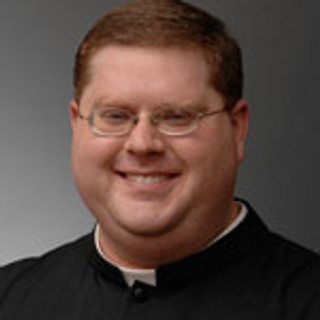
Fr. Scott Haynes
An Exhortation on 1 Peter 2:16

Charles-François Poerson (1653-1725), “Saint Peter Preaching in Jerusalem”
Saint Peter gives us a warning that is as searching as it is simple:
“As free, and not as making liberty a cloak for malice, but as the servants of God.”¹
He does not deny that Christians are free. On the contrary, he insists upon it. We are no longer slaves of sin, no longer chained to the old life, and no longer bound to the tyranny of every passion, resentment, appetite, and fear. Yet he immediately adds that Christian liberty must never become a disguise for self-will. Freedom can be falsified. It can be spoken of nobly while being lived selfishly. It can become a cloak, a covering, a fine religious or personal word thrown over something ugly beneath.
A cloak hides what is underneath. That is why Saint Peter’s phrase is so piercing. A man may say, “I am free,” when what he really means is, “I do not want to obey.” A person may say, “I am only being honest,” when the heart is really allowing bitterness to sharpen the tongue. Someone may say, “I have a right to speak,” when the deeper desire is not truth but victory. Another may appeal to conscience while refusing to examine whether conscience has been formed by humility, prayer, sacrifice, and the law of God. In all these ways, liberty can become a garment draped over malice.
Saint Augustine understood this danger because he understood that the will is never spiritually neutral. We are always loving something, and our freedom follows our love. His famous phrase, “Love, and do what you will,” is sometimes misunderstood as though it meant that love cancels discipline. In fact, Augustine meant the opposite. He wrote,
“Once for all, then, a short precept is given thee: Love, and do what thou wilt.”²
If the soul truly loves God, then its will is purified, and what it desires will be shaped by charity rather than selfishness. True love does not excuse sin; true love refuses to harm the beloved. This is exactly Saint Peter’s point. The Christian is free, but he is free as “the servant of God.”
Saint John Chrysostom speaks in the same spirit when he reflects on the slavery of sin and the divided will. Sin can command a man even while he knows better. This is a sobering truth, because a person may speak constantly about freedom and still be ruled from within. The angry man is not free, because anger commands him. The proud man is not free, because reputation commands him. The impure man is not free, because appetite commands him. The resentful man is not free, because old wounds command him. True liberty is not the absence of restraint. True liberty is the grace-given power to choose the good with a whole heart.³
Saint Francis de Sales gives the positive form of this teaching with great gentleness. He says, “We must do all things from love, and nothing from constraint,” and then adds,
“I leave you the spirit of liberty: not such as excludes obedience, for that is the liberty of the flesh, but such as excludes constraint, scruples, and over-eagerness.”⁴
This is a beautiful distinction. Christian liberty does not mean rebellion against obedience. It means obedience made peaceful by love. It is not the freedom of a soul that refuses to kneel. It is the freedom of a child who trusts the Father.
Here Saint John Fisher becomes a radiant example. He lived in an age when conscience was tested under pressure, and when many tried to make obedience to power sound like prudence, patriotism, or peace. Fisher was no reckless rebel. He was a bishop, a scholar, a pastor, and a servant of his country. Yet when King Henry VIII demanded an oath that would wound the truth of the Church, Fisher refused to let false obedience become a cloak for betrayal. He would not pretend that cowardice was moderation. He would not call fear prudence. He would not call silence fidelity when silence would have meant consent.
Fisher’s words on conscience are especially fitting here:
“Not that I condemn any other men’s conscience. Their conscience may save them; and mine must save me.”⁵
This is the opposite of using liberty as a cloak for malice. Fisher’s conscience was not a mask for pride. It was not a banner for rebellion. It was not a weapon with which he condemned others in order to exalt himself. His conscience was a sanctuary where he stood before God. He did not use freedom to escape obedience; he used freedom to obey God more completely. He did not use truth to become harsh; he used truth to remain faithful. He did not use courage to humiliate the weak; he used courage to give witness when almost every earthly advantage urged him to remain silent.
Saint John Fisher also shows us that true liberty has serenity in it. False liberty is often noisy, defensive, and restless because it is trying to protect something hidden. True liberty can be firm without being bitter, unyielding without being cruel, and courageous without becoming theatrical. Fisher’s strength was not the strength of self-will. It was the strength of a soul that knew it belonged to God. Because he was God’s servant first, he could serve others rightly. Because he feared God more than man, he did not need to be enslaved by approval, threats, ambition, or survival.
There is another saint who shows the opposite movement: the soul that once lived under the cloak of malice and later became free by grace. Saint Moses the Black, also called Moses the Ethiopian or Moses the Robber, had once been known for violence, crime, and domination. Palladius says that Moses had been driven out by his master because of his evil life and brigandage, and he frankly admits that he tells of Moses’s sins in order to show “the virtue of his repentance.”⁶ This is exactly why Moses is such a powerful example. His story does not merely show a sinner being forgiven. It shows a violent will being transformed into humility, gentleness, and mercy.
The Desert Fathers remembered Moses not chiefly as a man of violence, but as a man of repentance. The Sayings of the Desert Fathers introduces him as “Moses, called the Robber,” who later became a monk, was trained by Abba Isidore, and became one of the great fathers of Scetis.⁷ Grace did not simply cover his past. Grace conquered it. The man who had once used strength for sin learned to use strength in the service of humility. The man who had once lived by domination learned to live by obedience. The man who had once terrified others became a father of souls.
One story about Saint Moses makes the transformation especially vivid. When robbers attacked him after his conversion, he overpowered them, but instead of taking revenge, he brought them to the monastery and asked the brethren what should be done. According to the tradition, the robbers realized that this merciful monk was the very Moses who had once lived as they did, and they were moved to repentance.⁸ In that moment, Moses did not use strength as a cloak for malice. He used strength as a servant of mercy. The old Moses might have answered violence with violence, but the new Moses had become free enough to restrain himself, free enough to forgive, and free enough to let mercy do what force could never accomplish.
This is what conversion looks like. It is not merely that a man stops committing certain outward sins while remaining the same within. It is that the heart itself is re-ordered. The tongue becomes less eager to wound. The imagination becomes less eager to condemn. The will becomes less eager to dominate. The memory becomes less eager to preserve grievances. The soul that once needed to conquer others learns, by grace, to conquer itself. The man who once hid malice beneath strength learns to clothe strength with mercy.
So, Saint Peter’s warning asks each of us a very personal question: What do I use as a cloak? Do I cover impatience by saying, “That is just my personality”? Do I cover harshness by saying, “People need to hear the truth”? Do I cover selfishness by saying, “I have to take care of myself”? Do I cover laziness by saying, “I need peace”? Do I cover disobedience by saying, “I am following my conscience,” while refusing the light that would purify my conscience? The cloak may look respectable, but God sees what it covers.
The lesson is not that freedom is dangerous in itself. The lesson is that freedom must be purified by charity. Freedom without charity becomes self-will. Conscience without humility becomes self-deception. Truth without love becomes a blade. Strength without mercy becomes oppression. Zeal without prayer becomes anger in religious clothing. But when freedom is surrendered to Christ, it becomes beautiful. It becomes the liberty of the saints, the liberty of John Fisher before power, the liberty of Moses the Black after repentance, and the liberty of every soul that no longer needs to hide from God.
Therefore, we must cast off the cloak. We must not hide malice under liberty, cruelty under honesty, pride under strength, resentment under justice, or selfishness under self-care. We must stand before God without disguise, because He does not heal the soul we pretend to have; He heals the soul we truly bring to Him. We must let His light fall upon the hidden corners of the heart, so that He may show us where freedom has become an excuse, where conscience has become self-protection, and where zeal has become anger wearing a religious mask.
Christian freedom is a royal garment, but it is woven in the form of the Cross. It is the freedom of Christ standing silent before Pilate, because truth did not need rage in order to remain truth. It is the freedom of Christ praying for His enemies from Calvary, because love did not cease to be love when it was wounded. It is the freedom of Christ in the Eucharist, giving Himself entirely, because divine liberty is not selfish possession but total self-gift.
Let us live, then, as free souls, but as servants of God. Let our freedom be visible in patience, purity, reverence, humility, courage, and mercy. Let no bitter word hide beneath the name of truth. Let no selfish choice hide beneath the name of liberty. Let no disobedient spirit hide beneath the name of conscience. Let our freedom be clean, honest, luminous, and generous.
The world tells us,
“Be free, and belong to no one.”
Christ tells us,
“Be free, and belong wholly to Me.”
Only one of these freedoms leads to peace.
You were not made for the narrow prison of selfishness, even when selfishness calls itself freedom. You were made for the wide country of holiness, where the soul breathes freely because it belongs to God. The Lord does not desire to take away your freedom; He desires to heal it, strengthen it, purify it, and lift it up until your will can move with joy toward what is good.
Do not use liberty as a cloak to cover what grace is asking you to surrender. Do not call anger truth, and do not call pride strength. Do not call impulse freedom, and do not call self-will conscience. Bring these things honestly before Christ, because He is gentle with the repentant soul, but He is too loving to leave us hidden beneath our disguises.
Ask Christ to make you free enough to forgive when resentment feels powerful. Ask Him to make you free enough to obey when pride wants its own way. Ask Him to make you free enough to speak the truth without cruelty and to remain silent without cowardice. Ask Him to make you free enough to serve without needing applause, and humble enough to be corrected without resentment.
The servant of sin may boast that he belongs to no one, but in truth he is driven by every passion that conquers him. The servant of God may kneel, obey, sacrifice, and suffer, but he walks in the liberty of the children of God. Such a soul is not less free because it belongs to Christ. It is free at last because it belongs to the One who is Truth, Mercy, and Love.
Let us cast off the cloak and stand in the light of God. Let our freedom become charity, our strength become service, and our conscience become a sanctuary of truth rather than a hiding place for self-will. Let our whole life say, quietly and firmly, that we are free because we are His.
Footnotes
1 Pet. 2:16. Douay-Rheims text available at BibleGateway, “1 Peter 2:16,” accessed April 25, 2026, https://www.biblegateway.com/passage/?search=1%20Peter%202%3A16&version=DRA.
Augustine, Homilies on the First Epistle of John, Homily 7, trans. H. Browne, in Nicene and Post-Nicene Fathers, First Series, vol. 7, ed. Philip Schaff (Buffalo, NY: Christian Literature Publishing Co., 1888), revised and edited for New Advent by Kevin Knight, accessed April 25, 2026, https://www.newadvent.org/fathers/170207.htm.
John Chrysostom, Homilies on the Epistle of St. Paul the Apostle to the Romans, Homily 13, in Nicene and Post-Nicene Fathers, First Series, vol. 11, ed. Philip Schaff (Buffalo, NY: Christian Literature Publishing Co., 1889), revised and edited for New Advent by Kevin Knight, accessed April 25, 2026, https://www.newadvent.org/fathers/210213.htm.
Jean-Pierre Camus, The Spirit of St. Francis de Sales, trans. J. S. (London: Burns & Oates, 1889), chap. “Upon Liberty of Spirit,” Project Gutenberg, accessed April 25, 2026, https://www.gutenberg.org/cache/epub/9184/pg9184.html.
Vincent McNabb, O.P., Saint John Fisher (London: Burns, Oates & Washbourne, 1935), accessed April 25, 2026, https://motherofmercychapter.com/Library/Saint%20John%20Fisher%20-%20McNabb%2C%20Vincent%2C%20O.P.%20.pdf.
Palladius, The Lausiac History, trans. W. K. Lowther Clarke (London: Society for Promoting Christian Knowledge, 1918), chap. 19, accessed April 25, 2026, https://www.tertullian.org/fathers/palladius_lausiac_02_text.htm.
Benedicta Ward, trans., The Sayings of the Desert Fathers: The Alphabetical Collection, rev. ed. (Kalamazoo, MI: Cistercian Publications, 1984), “Moses,” accessed April 25, 2026, https://www.st-sergius.org/News/DF.pdf.
“Life of St. Moses the Black,” Brotherhood of St. Moses the Black, accessed April 25, 2026, https://mosestheblack.org/resources/life/.
Priestly Press


Wow, incredible reflection. Thank you